

When the United Nations adopted the Sustainable Development Goals (SDGs) in 2015, it set out an ambitious vision of a world free from poverty, hunger, inequality, and environmental degradation by 2030. Achieving these goals requires the collective efforts of governments, businesses, civil society organisations, and citizens working together to create lasting change.
For the Lagos Food Bank Initiative (LFBI), these global goals are translated into practical action every day through programs that address hunger, malnutrition, education, livelihoods, environmental sustainability, and strategic partnerships.
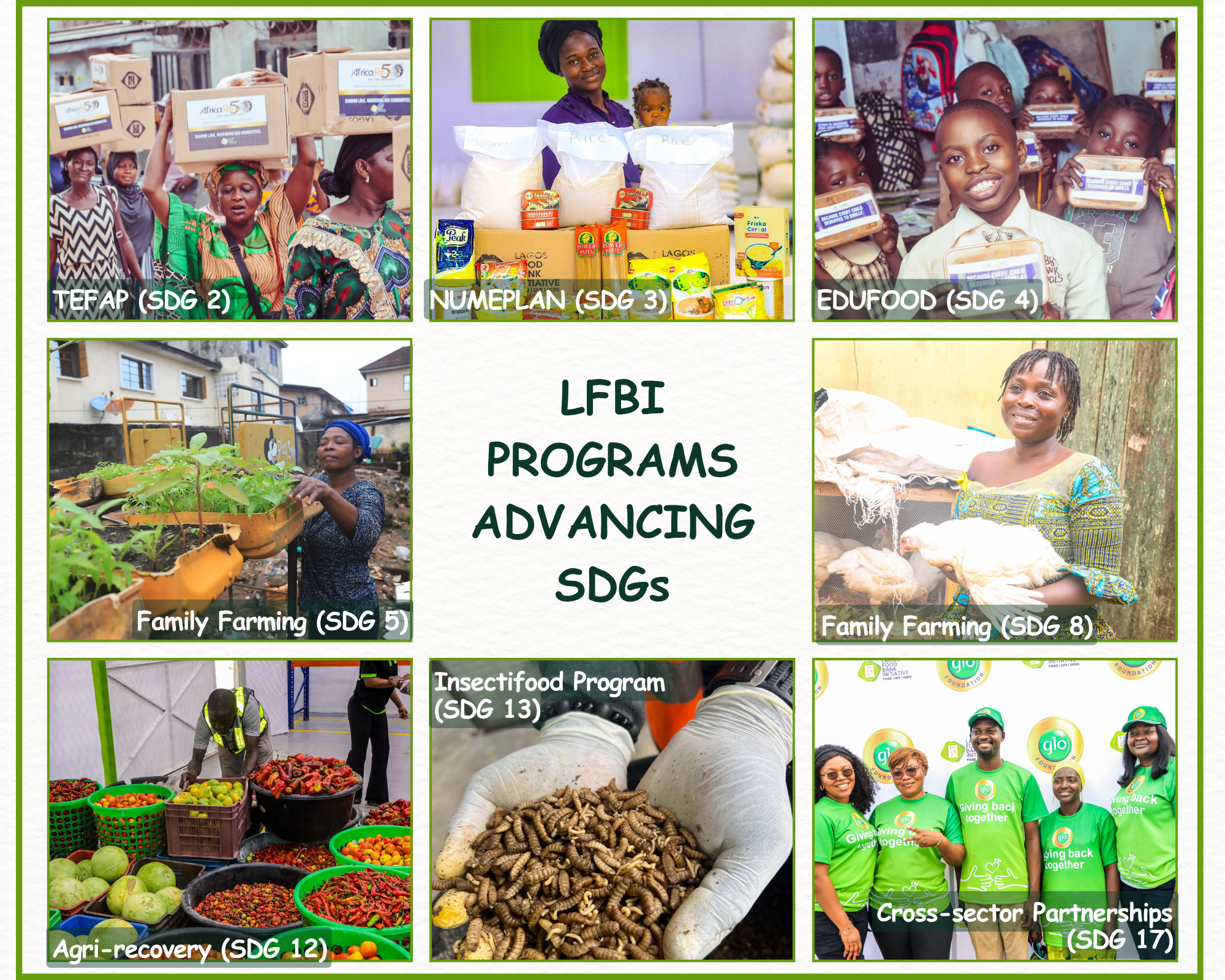
The organisation’s most visible contribution is to Zero Hunger (SDG 2). Through the Temporary Food Assistance Program (TEFAP), vulnerable households receive emergency food support, while the Nutrition and Maternal Enhancement program (NUMEPLAN) improves the nutritional status of malnourished children, pregnant women, and nursing mothers, advancing Good Health and Well-being (SDG 3).
Through the Education Enhancement Intervention for Food Insecure Students (EDUFOOD), the organisation also contributes to Quality Education (SDG 4) by providing nutritious school meals that improve attendance, concentration, and learning outcomes for children in underserved communities.
LFBI promotes Gender Equality (SDG 5) by empowering women, particularly female-headed households, through the Family Farming program. Beneficiaries receive training, seedlings, livestock, and ongoing support to strengthen household food security, generate income, and build greater economic independence.
These livelihood interventions also contribute to Decent Work and Economic Growth (SDG 8) by equipping women, youth, and local farmers with practical agricultural skills, creating sustainable livelihood opportunities, and strengthening local food systems.
Environmental sustainability is equally central to the organisation’s work. Through the Agricultural Recovery program, surplus farm produce is rescued and redistributed to vulnerable communities, reducing food waste and advancing Responsible Consumption and Production (SDG 12).
Complementing this effort is the Insectifood Program, developed by Green Harvest Agri-food (GHAI), the agricultural arm of the Lagos Food Bank Initiative. The Insectifood Program is a climate-smart circular agriculture initiative that converts organic waste into high-protein animal feed and nutrient-rich organic fertiliser using the Black Soldier Fly. Together, these programs reduce waste, improve soil health, support farmers, and contribute to Climate Action (SDG 13).
None of this impact would be possible without collaboration. Through partnerships with corporate organisations, development agencies, healthcare institutions, community organisations, and thousands of volunteers, the Lagos Food Bank Initiative continues to strengthen Partnerships for the Goals (SDG 17), demonstrating that sustainable development is achieved through shared responsibility.
What makes the organisation’s approach especially impactful is that a single intervention often advances several Sustainable Development Goals at once. A rescued basket of vegetables feeds a family while reducing waste. A school meal improves both nutrition and education. A woman equipped with farming skills gains the opportunity to feed her household and earn an income. Organic waste transformed through the Insectifood program becomes valuable agricultural resources instead of environmental waste. Every program creates ripple effects that extend far beyond its immediate purpose.
As Nigeria continues its journey toward achieving the Sustainable Development Goals, the Lagos Food Bank Initiative demonstrates that meaningful progress begins with practical action. The organisation invites individuals, corporate organisations, and development partners to join this shared mission. Together, global goals can become local realities, creating healthier communities, stronger livelihoods, and a more sustainable future for all.