

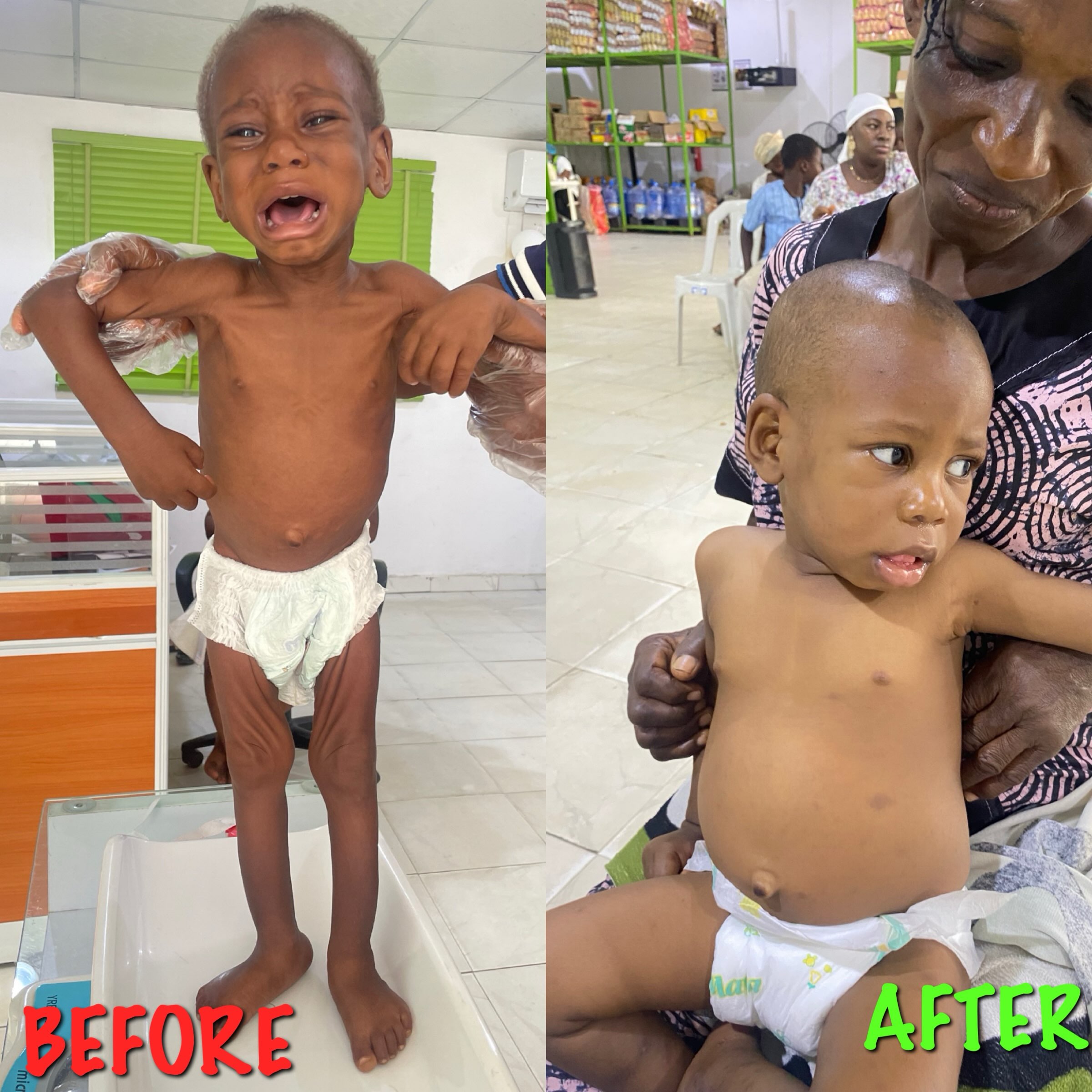
When Al-Amin arrived at the Lagos Food Bank Initiative (LFBI) with his grandmother, his frail appearance told a worrying story. Referred from a primary healthcare centre, the 19-month-old boy weighed just 7.3 kg and was diagnosed with severe acute malnutrition, with his weight-for-height measurement falling below -3 standard deviations.
Recognising the urgency of his condition, LFBI immediately enrolled Al-Amin in its Nutritious Meal Plan Intervention for Vulnerable Mothers and Children (NUMEPLAN), a programme that provides nutritional support, counselling and monitoring for vulnerable children and caregivers.
However, Al-Amin’s journey to recovery did not progress as expected.
When Recovery Stalled
Despite receiving support through NUMEPLAN, Al-Amin struggled to achieve the expected catch-up growth. During successive consultations, his measurements remained largely unchanged or declined, raising serious concerns for the programme’s dietitian.
Further nutritional assessments revealed that his condition had deteriorated, with kwashiorkor, a severe form of acute malnutrition, developing alongside visible skin changes associated with malnutrition.
The situation demanded more than nutritional support alone. It called for a closer examination of the factors preventing Al-Amin from recovering.
Finding the Missing Link
During an extensive counselling session, the dietitian engaged Al-Amin’s grandmother to better understand the challenges they were facing at home. It was during this conversation that she disclosed that Al-Amin had been experiencing recurrent episodes of diarrhoea.
This information provided an important clue. Persistent diarrhoea can interfere with nutrient absorption and worsen malnutrition, making medical assessment essential.
The dietitian referred Al-Amin to a paediatrician at a general hospital and emphasised the importance of appropriate medical care, alongside improved childcare and nutrition practices, in supporting his recovery.
For Al-Amin, this referral marked a critical step in addressing the challenges that had hindered his progress.
A Turning Point in Al-Amin’s Recovery
At his next appointment, the change in Al-Amin’s condition was remarkable. When the dietitian asked his grandmother what had changed, she explained that they had visited the paediatrician at the general hospital.
Following this visit, Al-Amin continued to make progress under the programme’s monitoring. He eventually attained 75% of his ideal body weight, marking an encouraging milestone in his journey towards nutritional recovery.
His progress underscored an important lesson: treating malnutrition requires more than providing food. It also involves identifying underlying health challenges, equipping caregivers with the right information, facilitating timely medical referrals and maintaining consistent follow-up.
Beyond Food: A Holistic Approach to Child Nutrition
Al-Amin’s experience reflects the importance of an integrated approach to addressing childhood malnutrition. While access to nutritious food is essential, children experiencing severe acute malnutrition may also require medical evaluation and treatment to address conditions that complicate their recovery.
Through NUMEPLAN, Lagos Food Bank Initiative works with vulnerable families to improve child nutrition through nutritional support, caregiver education, health monitoring and referrals when necessary.
Al-Amin’s journey also highlights the vital role caregivers play in a child’s recovery. With appropriate guidance, timely medical attention and continued support, families can take informed steps towards better health outcomes for their children.
Every child deserves the opportunity to grow, thrive and reach their full potential.
You can support Lagos Food Bank Initiative’s work to combat malnutrition and improve nutrition outcomes for vulnerable children by partnering with us, supporting our programmes or contributing to our mission.
Together, we can help more children take their first steps towards healthier futures, one community at a time.