

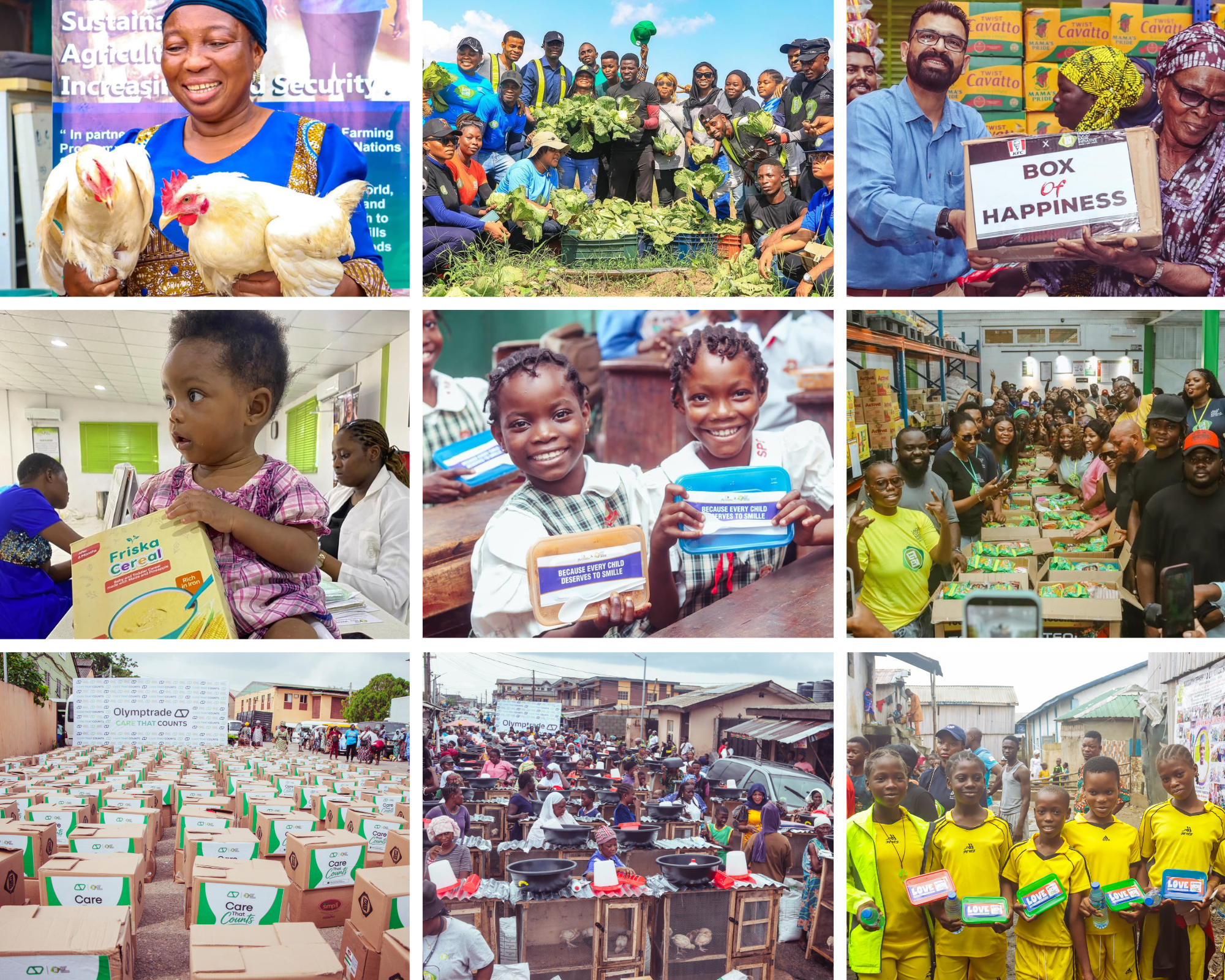
For a mother facing the difficult choice between feeding her children and meeting other household needs, a food box can mean far more than groceries. It can mean relief, dignity and one less worry.
That is the reality behind the work of the Lagos Food Bank Initiative (LFBI).
Since 2016, LFBI has grown from an emergency food-relief organisation into an integrated food-security organisation addressing hunger, malnutrition, food waste, poverty and livelihoods. The organisation reports reaching more than 3.5 million individuals and families across 170 communities in 15 states.
One Intervention, Many Pathways to Change
Through TEFAP, vulnerable households receive essential food support. But LFBI’s approach does not stop at immediate relief.
A malnourished baby can receive nutritious food, nutrition education and follow-up through NUMEPLAN. A child facing hunger at school can receive nutritious meals through EDUFOOD, helping reduce the burden of feeding and supporting the child’s ability to learn.
For families seeking a more sustainable path, Family Farming provides training and resources for vegetable, snail and poultry farming. LFBI reports that 84 beneficiaries now have established farms, while monitoring helps assess food security, income generation and the sustainability of their ventures.
Through Agricultural Recovery, surplus produce can also be rescued and redirected towards people experiencing food insecurity—turning food that might otherwise be lost into nourishment.
And through the Food Bank Network Nigeria (FBNN), LFBI extends its reach by working with other nonprofits to get food assistance into more communities.
Behind Every Programme Are People
None of this happens without volunteers.
LFBI reports having more than 30,000 registered volunteers, who support food sorting and packing, community outreaches, nutrition and farming programmes, as well as professional services such as communications, design and fundraising.
One volunteer, Esther, described LFBI as a platform that allows young people with a heart for service to help those in need “without expecting anything in return.”
And the impact is perhaps best captured by the people receiving the support.
Mrs. Ayomakun, a mother of five from Araromi whose husband has been seriously ill for years, shared that receiving support from LFBI for the fifth time was something her family would never forget and for which they remained grateful.
Another beneficiary’s story shows what can happen when relief becomes empowerment. Mrs. Adeola, a widow raising four children, moved from depending on TEFAP food support to receiving Family Farming training and resources. She eventually began growing vegetables and raising snails and poultry, consuming some of the produce and selling surplus to generate income for her household.
This is the bigger picture of food banking: a food box can meet an immediate need, but the right combination of nutrition, skills, agriculture, partnerships and sustained support can help a family move towards greater resilience.
At LFBI, the journey continues; from hunger relief to nutrition, from nutrition to empowerment, and from individual support to stronger communities.
Because fighting hunger is not only about filling empty plates. It is about creating the opportunity for families to thrive.