

Every year, on June 5th, the world marks World Environment Day. The 2026 theme, Inspired by Nature. For Climate. For Our Future, calls on everyone to look at the natural world not as a resource to be exploited but as a partner to be protected. For the Lagos Food Bank Initiative, this partnership has always been central to its work. Long before the global conversation turned to food waste as a climate driver, the organisation was already rescuing surplus harvests from farms across Lagos and turning potential pollution into nourishment for hungry families.
The connection between hunger and the environment is not always obvious. When a mother in Bariga cannot afford beans for her children, she is not thinking about methane emissions. When a father in Makoko skips meals to pay for medicine, he is not considering carbon footprints. Yet the link is undeniable. According to the Federal Government, climate change now poses a growing threat to food security and livelihoods in Nigeria. Unpredictable rainfall, flooding, and rising temperatures are destroying crops and driving up prices. At the same time, food waste itself accelerates climate change. When surplus produce rots in landfills, it releases methane, a greenhouse gas many times more potent than carbon dioxide. The very act of throwing away food makes the planet warmer, which in turn makes it harder to grow food.
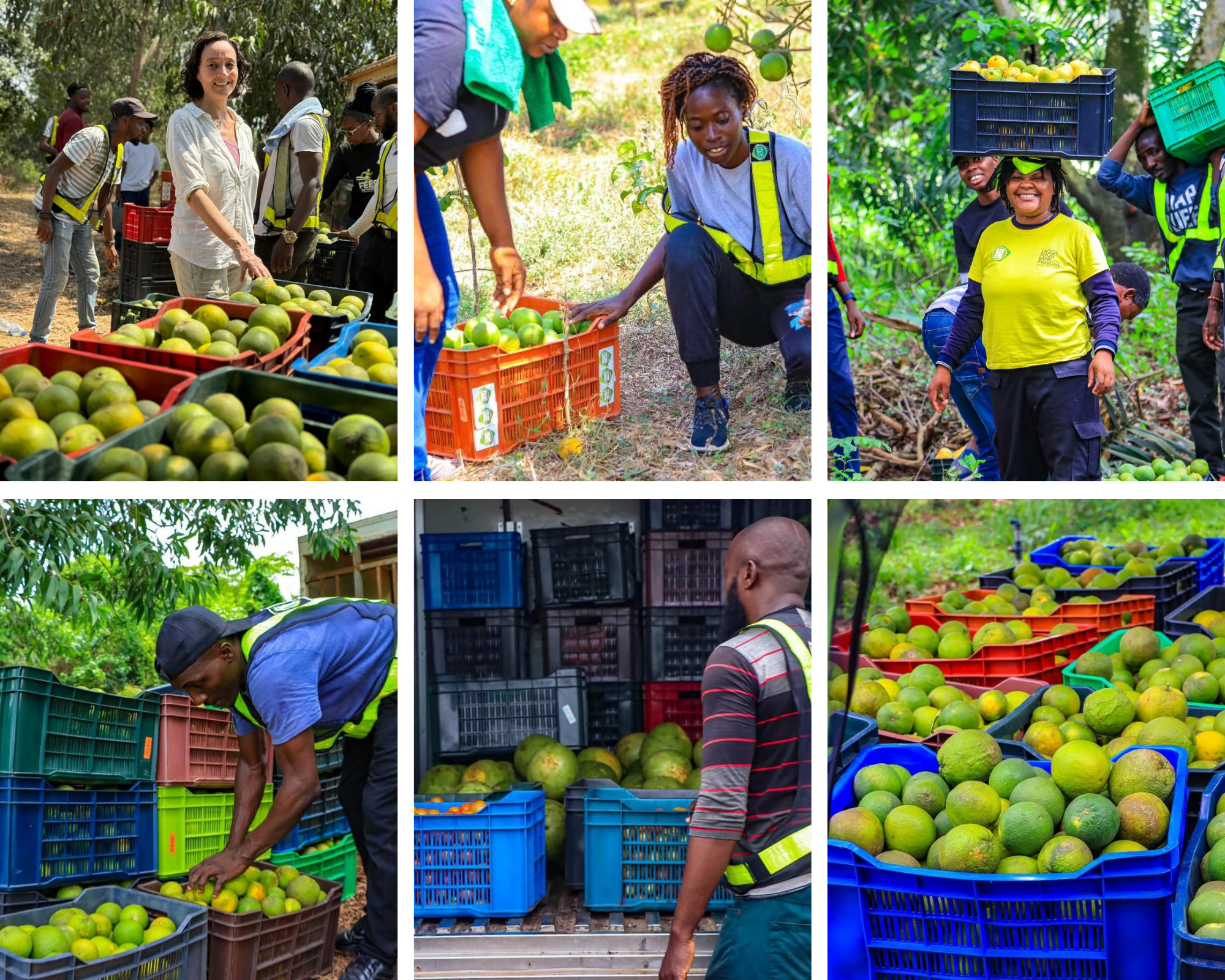
The Lagos Food Bank Initiative breaks this vicious cycle through its Agricultural Recovery Program (ARP). The programme works directly with local farmers to salvage crops that would otherwise be left to rot in the fields. Sometimes a harvest is too large for a farmer to sell before it spoils. Sometimes a bumper crop of tomatoes, peppers, or leafy greens arrives at the same time as a hundred other farmers’ produce, driving down prices so low that harvesting becomes unprofitable. In both cases, the food is perfectly good. But without intervention, it becomes waste.
The ARP steps in at this critical moment. Volunteers and staff from the Lagos Food Bank travel to partner farms, gather the surplus produce, and transport it to the organisation’s hub in Mangoro. There, the fresh fruits and vegetables are sorted, cleaned, and combined with staple items like beans, garri, and sardines to create balanced food boxes. These boxes are then distributed to vulnerable families across low-income communities in Lagos, including informal settlements, urban slums, and rural farming villages that are often the hardest hit by both hunger and climate shocks.
The impact of the Agricultural Recovery Program is measurable on two fronts. First, it feeds the hungry. Since its inception, the programme has salvaged thousands of kilograms of fresh produce that would otherwise have been lost, turning potential waste into meals for families who have nothing left to cut. Second, it protects the environment. By preventing decomposing organic matter from reaching landfills, the ARP directly reduces methane emissions, addressing the environmental consequences of food loss and its impact on climate change. Every tomato rescued, every pepper salvaged, every bunch of spinach diverted from the dumpster represents a small victory against global warming.
World Environment Day is a moment to reflect on what each person and each organisation can do to answer the call of nature. For the Lagos Food Bank Initiative, the answer is already in action. The Agricultural Recovery Program stands as a living example that solutions to hunger and climate change can be the same solution. Rescue the food. Feed the people. Cool the planet.
The organisation invites individuals, corporate partners, and community groups to support this work. Donations to the Lagos Food Bank Initiative help fund the trucks that transport rescued produce, the volunteers who sort and pack it, and the nutritionists who ensure that every rescued vegetable reaches a family that needs it most. Because saving the planet begins with saving what we already have.