

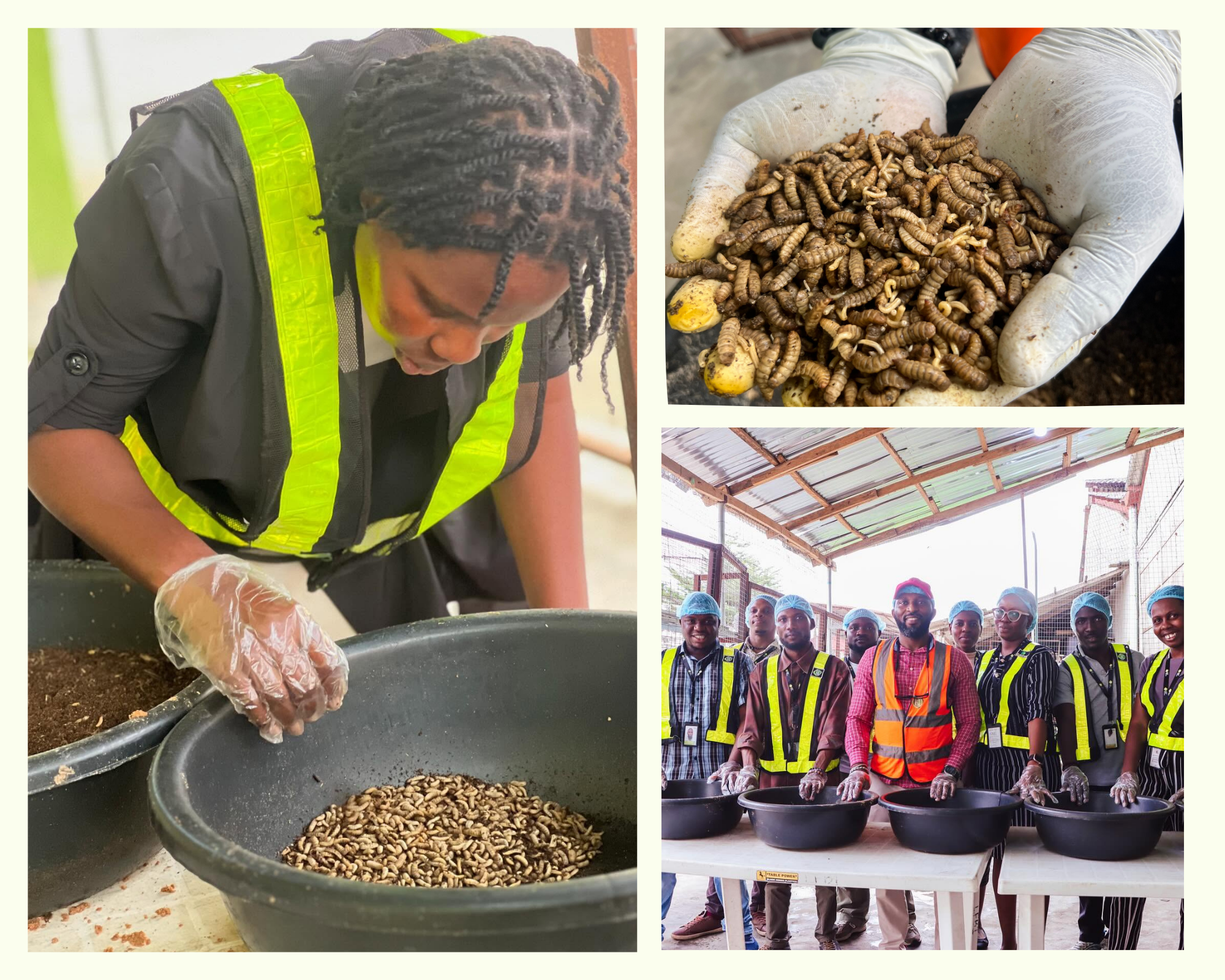
Every planting season begins with expectations. But for many smallholder farmers across Nigeria, this is often tested by rising livestock feed costs, declining soil fertility, and shrinking profit margins. At the same time, tons of organic waste from homes, markets, and farms are discarded every day, creating environmental challenges while valuable resources are lost.
The Insectifood Program, developed by Green Harvest Agri-food (GHAI), the agricultural arm of the Lagos Food Bank Initiative, was created to change that story.
Built on the principles of climate-smart, circular agriculture, the program transforms organic waste into high-protein insect-based animal feed and nutrient-rich organic fertiliser using the natural waste-processing ability of the Black Soldier Fly. Instead of allowing waste to become pollution, it is converted into valuable agricultural resources that strengthen food production and improve livelihoods.
The impact reaches far beyond waste management. Affordable insect-based feed helps livestock farmers reduce production costs, while organic fertiliser restores soil health and improves crop yields. Together, these solutions help farmers become more productive and resilient in the face of rising agricultural challenges.
The program also creates opportunities for women and young people to build sustainable livelihoods through training and participation in the circular agricultural value chain. By turning what was once discarded into something valuable, the initiative demonstrates that innovation can create both economic opportunity and environmental sustainability.
Beyond supporting farmers, the Insectifood program contributes to a healthier planet. Recovering organic waste reduces the volume sent to landfills, lowers greenhouse gas emissions associated with decomposition, and promotes more responsible use of natural resources. It is a practical example of how local innovation can help address global challenges.
Through this work, the Green Harvest Agri-food Initiative advances several Sustainable Development Goals, including Zero Hunger, Gender Equality, Decent Work and Economic Growth, Responsible Consumption and Production, Climate Action, and Partnerships for the Goals. More importantly, it is helping build a food system where resources are used wisely, communities become more self-reliant, and environmental responsibility goes hand in hand with food security.
Through the Insectifood Program, what was once considered waste can become nourishment for farms, income for households, and hope for communities.
The Lagos Food Bank Initiative invites government agencies, corporate organisations, development partners, researchers, and individuals to support the growth of this innovative program. Together, it is possible to transform waste into opportunity and build a more resilient, sustainable future for generations to come.