

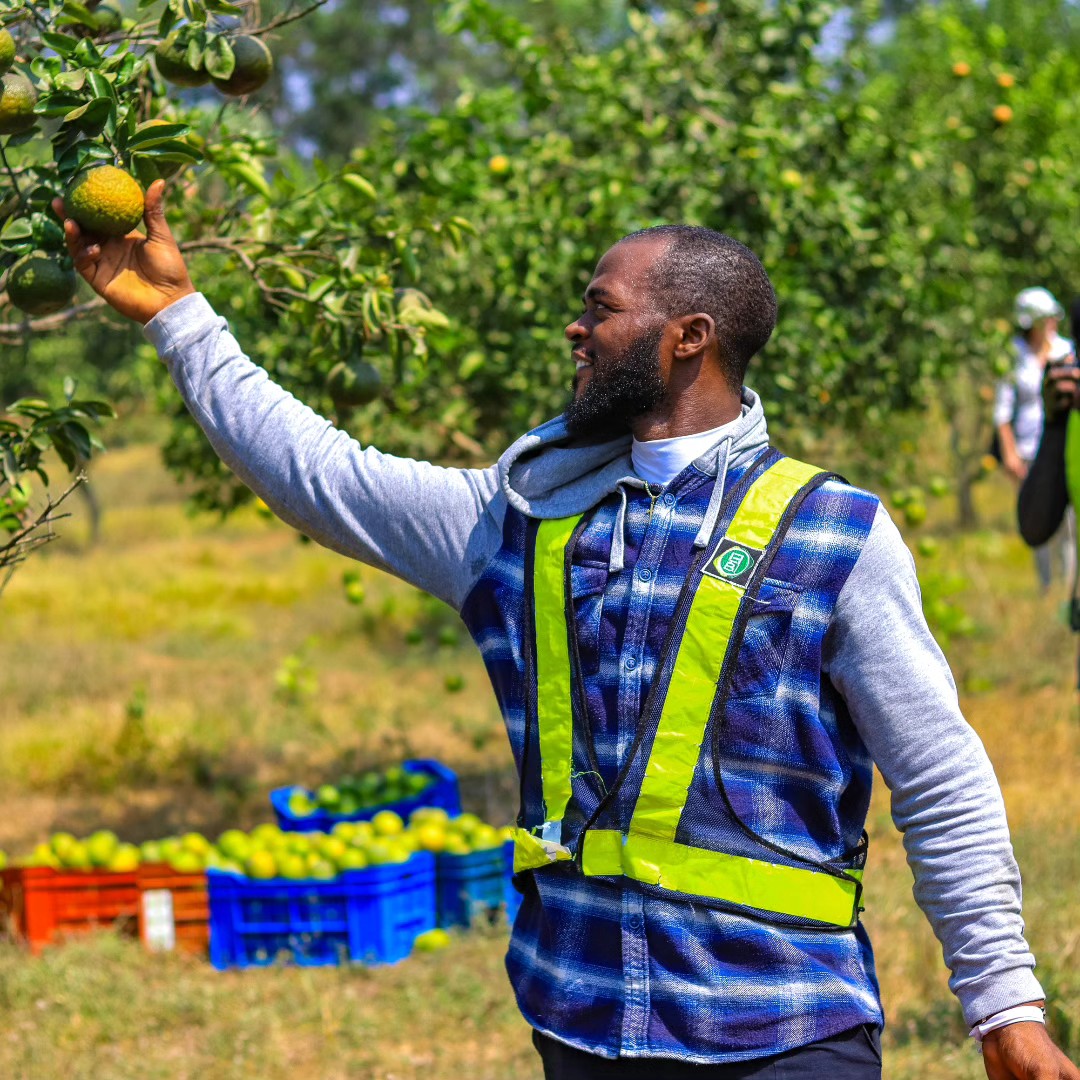
On a citrus farm just outside Lagos, Sunday Olufemi faced a challenge that is all too common among smallholder farmers, which is good fruit going to waste.
Not because the produce was of poor quality, and not because there was no demand. The challenge was timing. Like many farmers, he operates within a food system where produce can be successfully harvested but still lost before it reaches consumers. For perishable crops, delays in storage, transportation, or market access quickly turn surplus into waste.
At the Lagos Food Bank Initiative (LFBI), this is the gap we are working to close through our Agricultural Recovery Program (ARP). The program focuses on recovering surplus agricultural produce directly from farms and other supply points, and redistributing it to vulnerable households through our existing nutrition interventions. By doing this, we are not only reducing food loss at the production level but also improving access to fresh and nutritious food for underserved communities, while minimizing the environmental impact of food waste.
Nigeria continues to face a significant food and nutrition challenge. According to the Food and Agriculture Organization (FAO), an estimated 30.6 million people were projected to experience acute food and nutrition insecurity during the 2025 lean season. At the same time, post-harvest losses remain alarmingly high, with up to 50% of fruits and vegetables lost annually due to gaps in storage, transportation, and distribution.
Through the Agricultural Recovery Program, LFBI is addressing this disconnect in a practical and immediate way. In Olufemi’s case, oranges that would have spoiled on the farm were instead recovered and integrated into our distribution network, reaching mothers, children, and families already supported through our programs. In the past year alone, 49,534 kilograms of fresh produce have been rescued and redistributed through this intervention.
While the Agricultural Recovery Program does not solve every challenge within Nigeria’s food system, it addresses a critical and actionable gap. It demonstrates that food waste and food insecurity can be tackled together through coordinated, on-the-ground solutions.
Be part of the impact. Support the mission through volunteering, donations, or partnerships. Visit the Lagos Food Bank website or reach out to learn how you can help turn surplus into sustenance.