

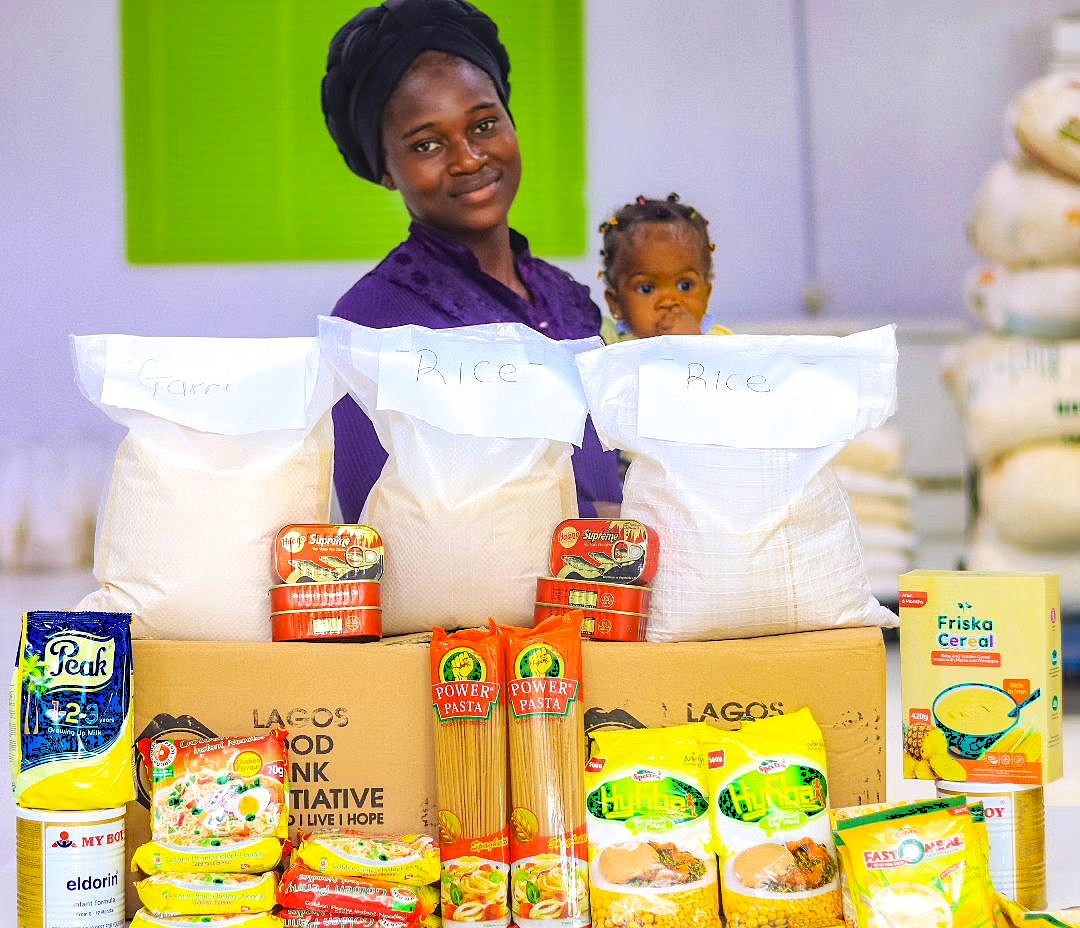
A few months ago, a young mother left a hospital in Lagos with a bag of antibiotics and a broken heart. Her two-year-old daughter, Damilare had spent days fighting a severe infection. The drugs had worked. The fever was gone. But the child still could not stand. The doctor looked at the mother and said, “the medicine worked, but her body has nothing left to heal with.”
By that point, the mother had already spent her last ₦50,000 on consultations, tests, and medication. There was nothing left for eggs, beans, or even a proper meal. Her daughter went home with treatment, but without the nourishment to aid recovery.
This crisis unfolds daily across Lagos. As healthcare costs rise, many families are forced into an impossible decision: pay for medicine or pay for food. For low-income households, affording both is often out of reach. And when nutrition is missing, recovery becomes fragile.
This is where the Lagos Food Bank Initiative (LFBI) comes in.
The Lagos Food Bank has long recognized fighting hunger as a form of healthcare. Through the Nutritious Meal Plan Intervention (NUMEPLAN), the organization works alongside primary healthcare centres to support vulnerable mother-child pairs before malnutrition becomes life-threatening. Children under the age of two who are clinically diagnosed with severe malnutrition receive more than a food package. They receive nutrient-rich food, nutritional support, and follow-up care to help strengthen recovery. Mothers are also equipped with food support, and practical guidance on feeding and meal planning, helping families build healthier habits beyond the intervention itself.
In practice, healing can look as simple as a food box containing beans, garri, sardines, vegetable oil, and other everyday staples that can sustain a recovering child for days. It can look like healthcare workers knowing they can contact the food bank when they encounter families who cannot afford both treatment and nourishment.
Because recovery does not end at the pharmacy.
Through the Temporary Food Assistance Program (TEFAP) the Lagos Food Bank Initiative continues to support families whose medical treatment is threatened by hunger. They help ensure that a child treated for malaria does not relapse because their immune system is weakened by poor nutrition. They stand in the gap for mothers who skip meals so their children can afford medication.
This is more than charity. It is preventive healthcare.
Doctors can treat illness, but recovery is also shaped by whether a family can afford proper nourishment. Medicine may fight diseases, but food helps restore strength and support healing.
The Lagos Food Bank Initiative invites individuals, partners, and supporters to be part of this restoration.