

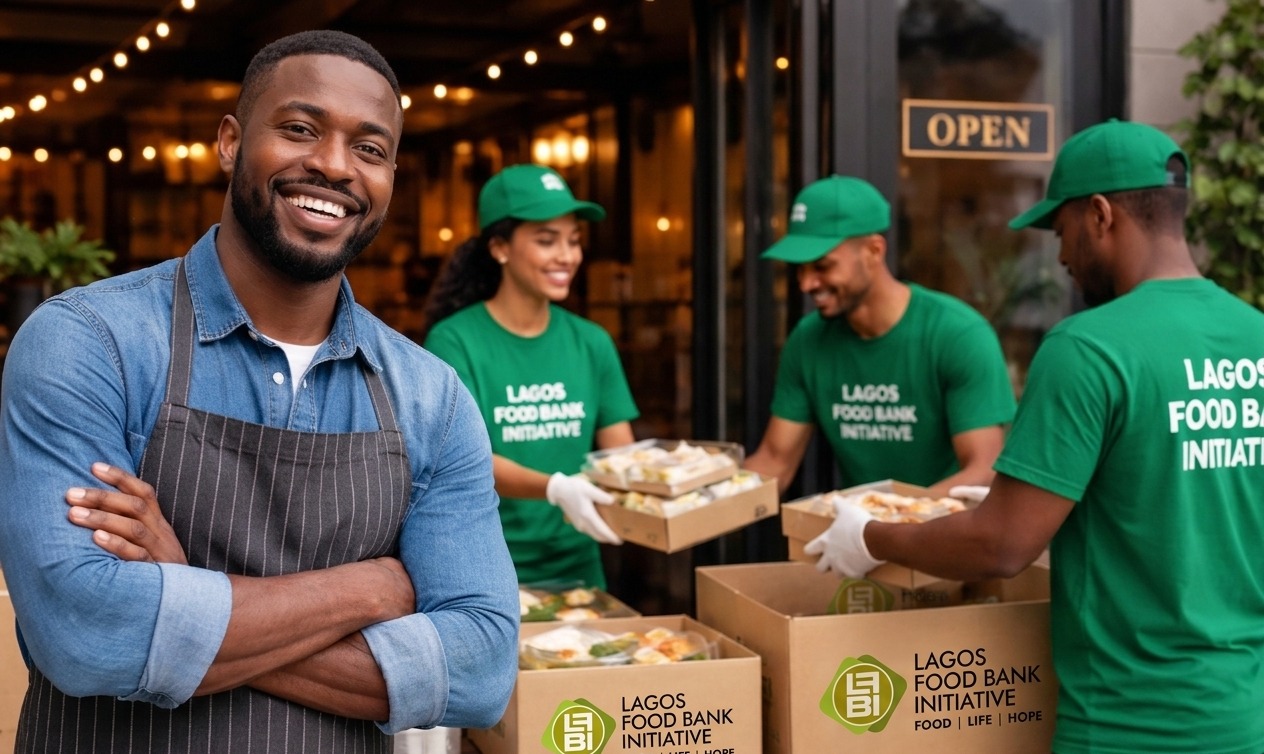
Every evening, as the rush slowed and the last customers drifted away, Chinedu would stand in his small food outlet in Lagos, staring at trays of unsold meals. Perfectly good food; fresh, warm, and nourishing, yet destined for the bin by closing time. For him, it was more than just waste; it was a quiet frustration, knowing that just a few streets away, families would go to bed hungry.
That changed when he partnered with Lagos Food Bank Initiative through its Virtual Food Banking system.
At first, it seemed simple, call the Food Bank officer and indicate surplus availability, and schedule a pickup. But for Chinedu, it became something much bigger. Instead of discarding meals, he began setting them aside with purpose, knowing they would reach people who truly needed them. Within hours, the food was collected, sorted, and redistributed to vulnerable households.
One evening, after a long day, Chinedu watched as volunteers loaded neatly packed meals from his shop into a van. “This used to go to waste,” he said quietly. “Now, it feeds families.”
The impact was immediate, not just for the beneficiaries, but for his business as well. Reducing waste meant lower losses, and being part of a meaningful cause gave his brand a new sense of purpose. Customers began to notice, asking questions, expressing support, and even choosing his outlet because of its social impact.
Virtual Food Banking is redefining how food systems work. By connecting food vendors, restaurants, and producers with structured redistribution networks, it ensures that surplus food is not wasted but redirected to where it is needed most. It is efficient, scalable, and deeply impactful, transforming everyday business operations into opportunities for social good.
For vendors like Chinedu, it’s no longer just about selling food, it’s about feeding communities.
Across Lagos, more partners are joining this movement, proving that the fight against hunger does not always require more production, sometimes, it simply requires better coordination and a willingness to act.
Because when surplus food finds purpose, waste is reduced, businesses are strengthened, and lives are changed.
And for Chinedu, the end of each day now carries a different feeling, not loss, but impact.
You too can make an impact either as a partnering vendor, or a volunteer, or an advocate to reduce food waste and improve food security in our communities through the virtual food banking initiative. Visit Lagos Food Bank Initiative website today to learn more about how you can support underserved communities.