

Nigeria’s food security challenge is not only about producing more food. It is also about reducing food loss, improving food distribution and making it easier for safe surplus food to reach people who need it. Food banks can play an important role in bridging this gap by connecting farmers, manufacturers, retailers and other donors with food-insecure households.
To unlock this potential, Nigeria needs policies that make food donation easier, safer and more sustainable.
- Introduce stronger tax incentives for food donations.
The Companies Income Tax Act should explicitly recognise accredited food recovery organisations and allow businesses to claim deductions for eligible in-kind food donations. The Global Food Donation Policy Atlas also recommends allowing deductions for reasonable costs related to storing, transporting and delivering donated food. - Establish a national food recovery and donation framework.
A clear national policy could provide guidelines for farmers, manufacturers, supermarkets, hotels and other food businesses to safely redirect edible surplus food to accredited food banks rather than allowing it to become waste. - Strengthen post-harvest infrastructure.
Investment in cold-chain facilities, storage, processing and transportation would help reduce losses between farms and consumers while making more nutritious food available for redistribution. LFBI’s Agricultural Recovery Program demonstrates how surplus produce can be rescued from farms and markets and redirected to vulnerable communities. - Provide clear food-safety and liability guidelines.
Businesses are more likely to donate when they understand their responsibilities and have clear standards for food safety, handling, labelling and traceability. Accredited food banks can serve as trusted partners in ensuring donated food is safely managed. - Build stronger public-private partnerships.
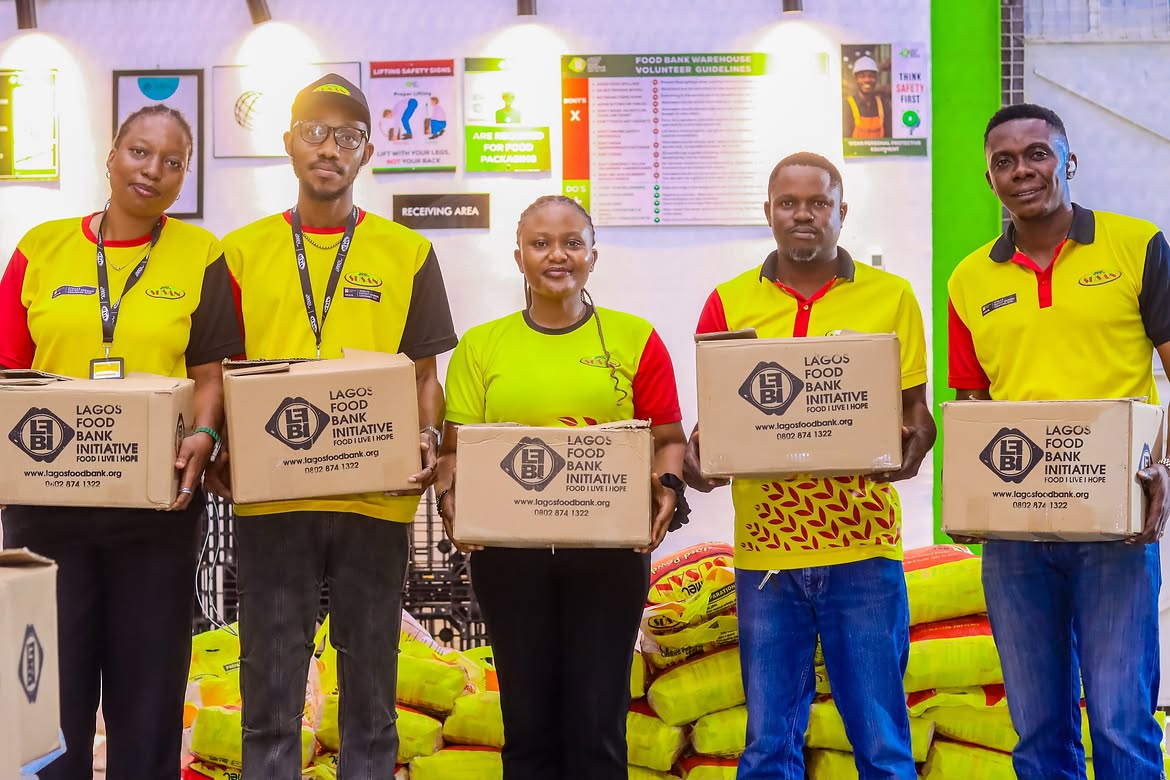
The government, food banks, farmers, food manufacturers, retailers and development organisations should collaborate on food rescue, storage and redistribution. Recent LFBI Food Bank Network Nigeria distributions demonstrate how partnerships can extend food assistance beyond the immediate reach of a single organisation.
Ultimately, food security is not achieved by production alone. It also depends on ensuring that the food already produced is preserved, recovered and equitably distributed.
With the right policies, Nigeria can turn more surplus into nourishment, more donations into impact, and more partnerships into lasting food security.
The goal should be simple: waste less, recover more, and make every safe and nutritious meal count.