

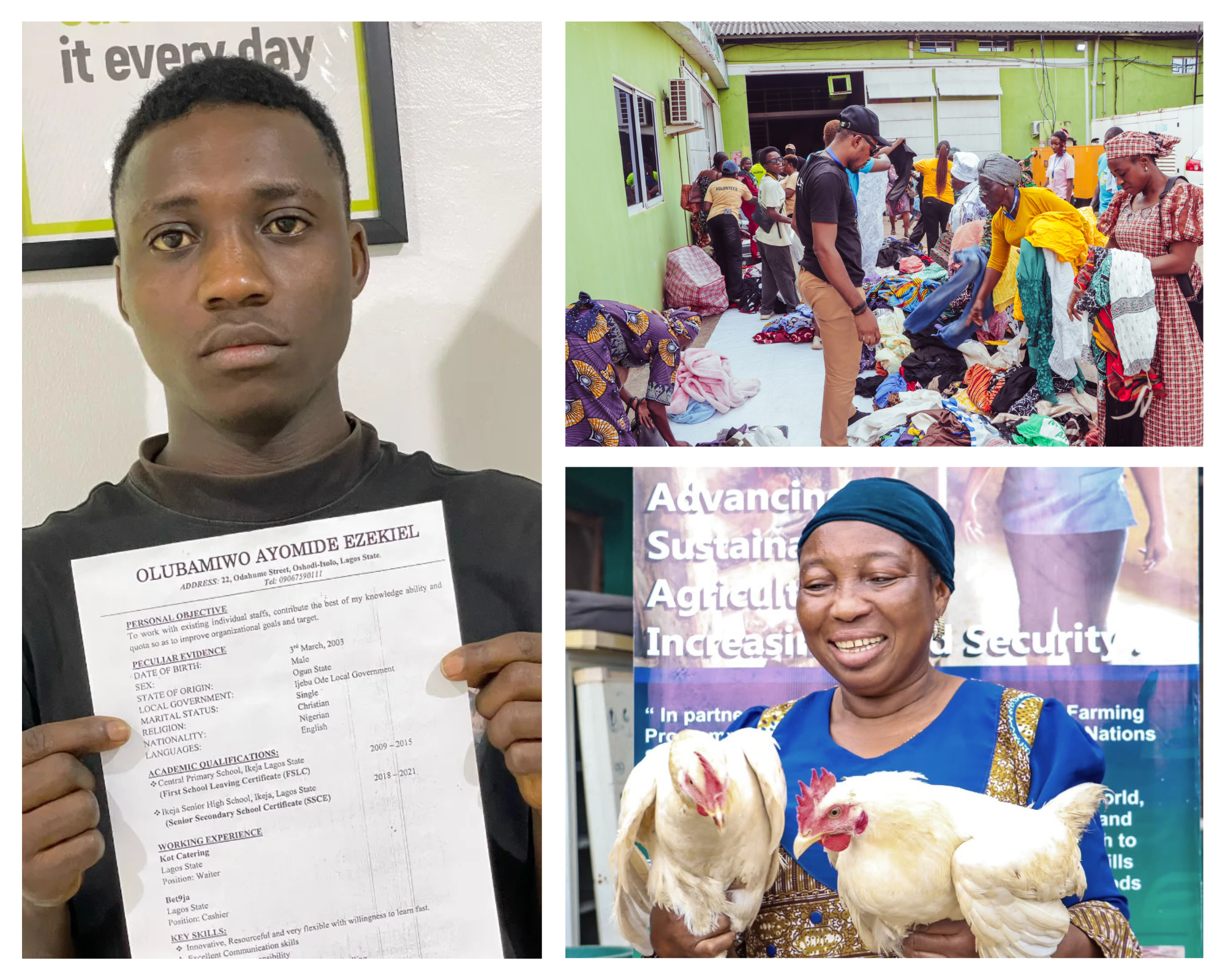
Sometimes, hope begins with something simple: a box of food, a new means of livelihood, a set of clothes, or an opportunity to earn a living.
For a struggling household, these are more than material provisions. They can ease daily worries, restore confidence and create room to imagine a better future.
At Lagos Food Bank Initiative (LFBI), this understanding drives a commitment to supporting vulnerable communities beyond immediate hunger relief. Through the Temporary Food Assistance Program (TEFAP), Family Farming, Cloth Banking Nigeria and Job Placement, LFBI addresses different but interconnected needs, helping individuals and families move towards greater stability and self-reliance.
Four pathways to renewed hope
Through the Temporary Food Assistance Program (TEFAP), LFBI provides essential food supplies to vulnerable households, helping families meet immediate nutritional needs while easing the financial pressure of daily living. Each food package is designed to sustain a family of five for over two weeks, allowing households to redirect limited resources towards other necessities, including healthcare and education. Since its inception, TEFAP has reached over 170 communities, delivering food relief to families facing food insecurity.
Through Cloth Banking Nigeria, LFBI extends assistance beyond food by providing donated clothing, footwear and other essential non-food items to people experiencing financial hardship. By easing the cost of basic necessities, the program helps beneficiaries preserve their limited resources and maintain their dignity. Its impact also extends to employment support, as access to professional clothing can help job seekers feel prepared and confident when attending interviews. This practical approach demonstrates LFBI’s commitment to addressing interconnected needs and helping vulnerable individuals access opportunities for a better future.
Through its Family Farming initiative, LFBI equips vulnerable households, particularly women and youth, with agricultural training, practical knowledge and starter resources to cultivate vegetables, rear poultry and raise snails. The program supports household food production while creating opportunities to generate income from surplus produce. LFBI reports that 84 beneficiaries have established their own farms, demonstrating how targeted agricultural support can help families move beyond immediate food assistance towards more sustainable livelihoods. By promoting local food production and self-reliance, Family Farming contributes to household resilience and a stronger community food system.
Through its Job Placement Program, LFBI addresses a key driver of food insecurity by helping unemployed and underemployed individuals access meaningful employment opportunities. The program supports beneficiaries with CV preparation, interview guidance, and connections to potential employers.
One example is Olubunmi, whose search for employment led her to LFBI’s Job Placement Program. After receiving CV support, interview guidance, and assistance with professional clothing through Cloth Banking Nigeria, she secured a job as a Front Desk Attendant. Her experience demonstrates how coordinated support can help transform uncertainty into opportunity.
Together, these programs reflect LFBI’s holistic approach to community development: providing immediate relief, strengthening livelihoods and creating pathways towards dignity, resilience and self-reliance.
Beyond assistance, towards independence
These programs reflect an important truth: restoring dignity requires more than meeting immediate needs. It also means helping people regain confidence, access opportunities and build a more secure future.
For LFBI, every food package, clothing donation and employment opportunity represents another step towards that goal.
Because delivering hope is not simply about helping people through difficult times; it is about creating opportunities for them to move beyond those difficulties.
Through compassion, community partnerships and practical interventions, Lagos Food Bank Initiative continues to demonstrate that when immediate relief meets meaningful opportunity, families can move closer to stability, dignity and independence; one family, one opportunity and one community at a time.