

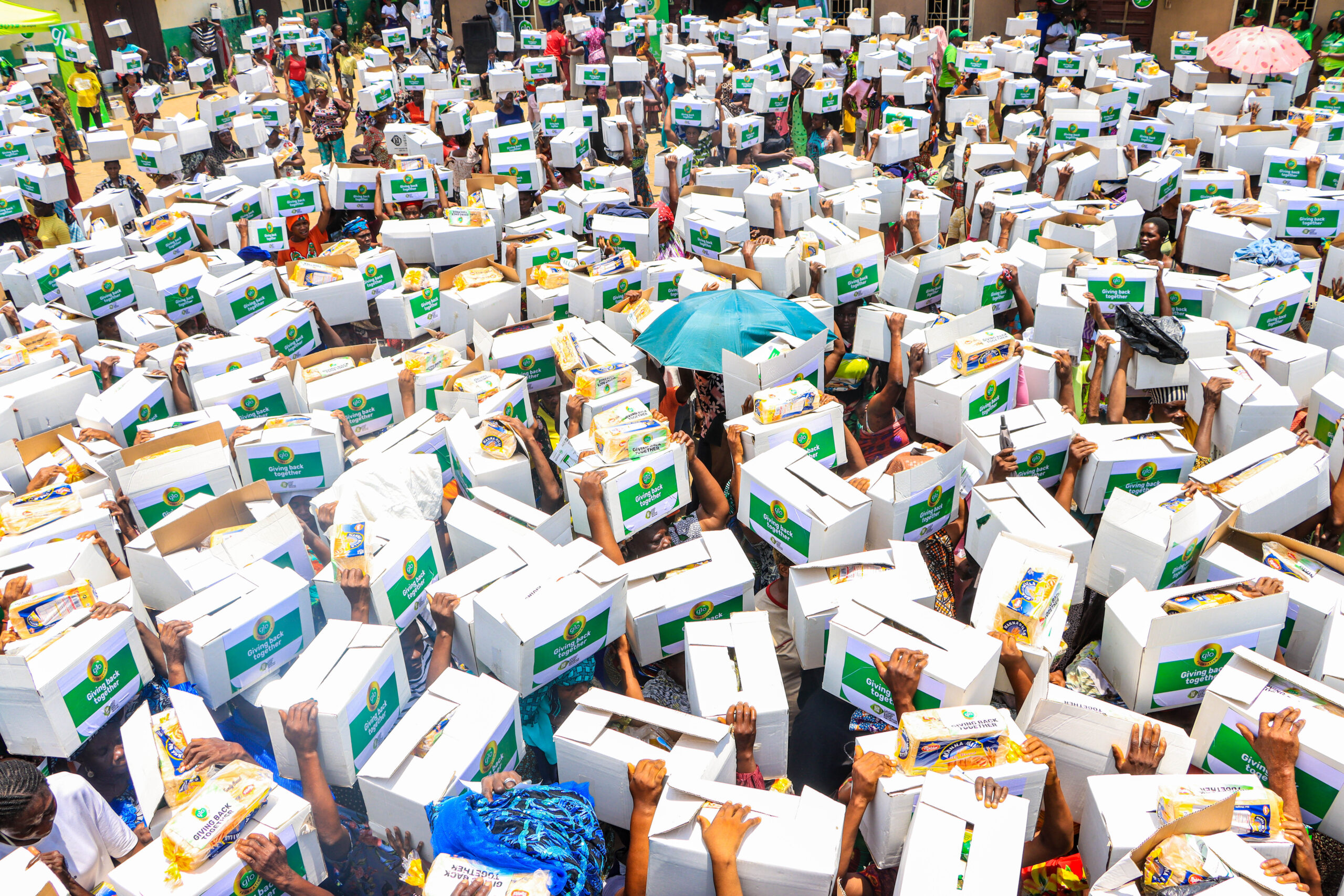
For a family struggling to put food on the table, a food box can mean more than a meal. It can mean relief, dignity and the hope of getting through another difficult day.
This is the reality that drives the work of the Lagos Food Bank Initiative (LFBI). Since its establishment in 2016, LFBI has grown from a hunger-relief organisation into a broader food-security organisation addressing hunger, malnutrition, food waste and poverty through nutrition, food assistance, agriculture and livelihood interventions. Today, LFBI reports reaching more than 3.5 million individuals and families across 170 communities in 15 states.
But the impact is perhaps best understood through what happens beyond the numbers.
From food assistance to lasting change
A mother struggling to feed her children may receive essential food support through TEFAP, while a malnourished child can receive nutritious food, counselling and follow-up through NUMEPLAN. For children in low-income schools, EDUFOOD provides school meals designed to reduce the impact of hunger on learning.
And LFBI’s work does not stop at emergency food assistance. Through programmes such as Family Farming and Agricultural Recovery, vulnerable households can receive opportunities to strengthen food production and livelihoods, while surplus agricultural produce can be rescued and redirected to people experiencing food insecurity.
The organisation is also extending its reach beyond communities it directly serves.
In August 2026, LFBI’s Food Bank Network Nigeria (FBNN) supported 40 credible nonprofit organisations with food supplies at its Ikeja warehouse. The organisations, working in different communities across Nigeria, could then redistribute the food to families and individuals in need.
This model demonstrates an important lesson: fighting hunger is stronger when communities work together.
Since FBNN began in 2020, LFBI says it has provided food grants and relief packages to more than 540 local food banks, pantries and nonprofit organisations, collectively reaching approximately 780,000 beneficiaries across Nigeria.
Building communities, not dependency
The ultimate goal is not simply to provide food today, but to help create communities where fewer families are forced to go without it tomorrow.
That means combining immediate food relief with nutrition support, education, food rescue, agriculture and livelihood opportunities—addressing both the immediate consequences and underlying drivers of food insecurity.
Every food box distributed, every rescued bag of produce, every child nourished and every family empowered represents a step towards a more resilient community.
Lagos Food Bank Initiative is fighting hunger one meal at a time—but transforming communities one opportunity at a time.
And this work cannot be done alone.
Businesses can donate surplus food. Individuals can give. Volunteers can serve. Organisations can partner. Communities can participate.
Together, we can move from simply responding to hunger to building a Nigeria where more families have access to nutritious food, greater resilience and the opportunity to thrive.
Because when we fight hunger together, we don’t just fill empty plates—we help build stronger communities.