

Nigeria is a country of agricultural abundance. From the cassava farms of the south to the grain fields of the north, the nation produces vast quantities of food. Yet millions of Nigerians still go to bed hungry every night. The question is not whether food exists, but why so many people cannot access it.
The answer lies not in what Nigeria grows, but in what happens to food after it leaves the farm and whether families can afford it when it reaches the market.
Consider the journey of a single tomato. During harvest season, tomatoes flood markets across northern Nigeria. Prices collapse as farmers rush to sell before the produce spoils. Without adequate cold storage, processing facilities, or efficient transportation, large quantities are lost. Weeks later, scarcity sets in, prices rise sharply, and the same tomatoes become unaffordable for many households. The problem is not production. It is the breakdown of the food system.
Nigeria loses between 30 and 40 million metric tonnes of food every year, nearly 40 percent of total agricultural production. Poor storage facilities, weak transport infrastructure, and inefficient logistics mean that food which should nourish families instead becomes waste.
Even when food reaches the market, millions cannot afford it. Rising food, transport, and energy costs continue to erode household purchasing power, while inflation has pushed basic staples beyond the reach of many families. The International Monetary Fund estimates that poverty now affects 63 percent of Nigerians, with millions facing food insecurity despite improvements in broader economic indicators.
Insecurity has further deepened the crisis. Across many farming communities, violence and displacement have forced farmers off their land, disrupted food production, and reduced supplies. The result is lower agricultural output, higher food prices, and worsening hunger, particularly across northern Nigeria where millions of people, including children, continue to face severe food insecurity and acute malnutrition.
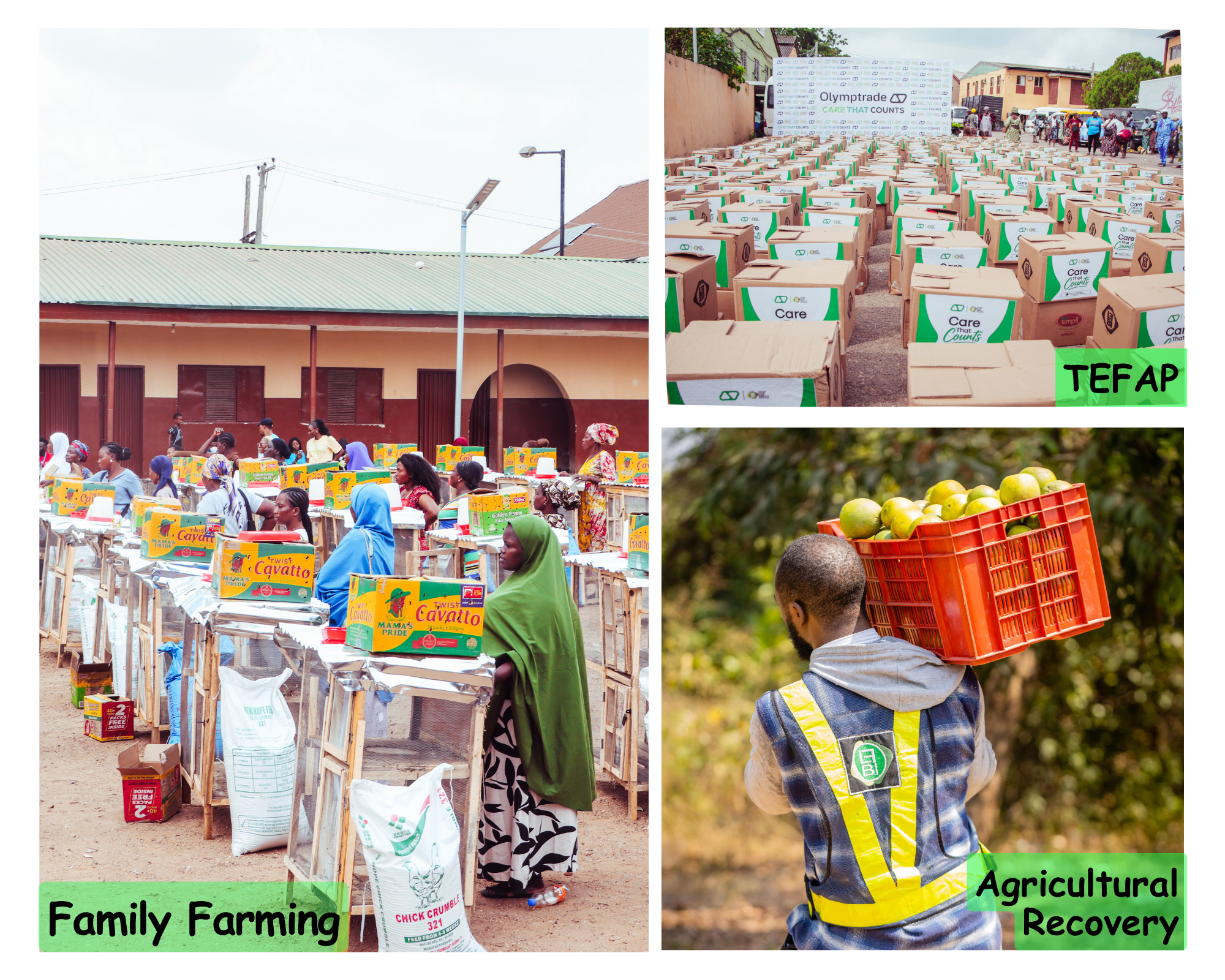
The Lagos Food Bank Initiative addresses this paradox through practical interventions across the food system. Through its Agricultural Recovery Program (ARP), surplus produce that would otherwise be wasted is recovered from farmers and redistributed to vulnerable communities. Through the Temporary Food Assistance Program (TEFAP), emergency food support reaches families struggling to afford basic staples. Through the Family Farming Program, vulnerable households receive training, seedlings, and livestock to grow their own food and build long-term resilience.
Nigeria is not hungry because food is unavailable. It is hungry because too much food is wasted, too many families cannot afford what reaches the market, and too many barriers prevent food from reaching those who need it most.
The Lagos Food Bank Initiative is helping bridge that gap every day, but lasting change requires collective action. Individuals, corporate organisations, and development partners all have a role to play. Together, it is possible to build a Nigeria where agricultural abundance is matched by food security, and where no family goes to bed hungry.