

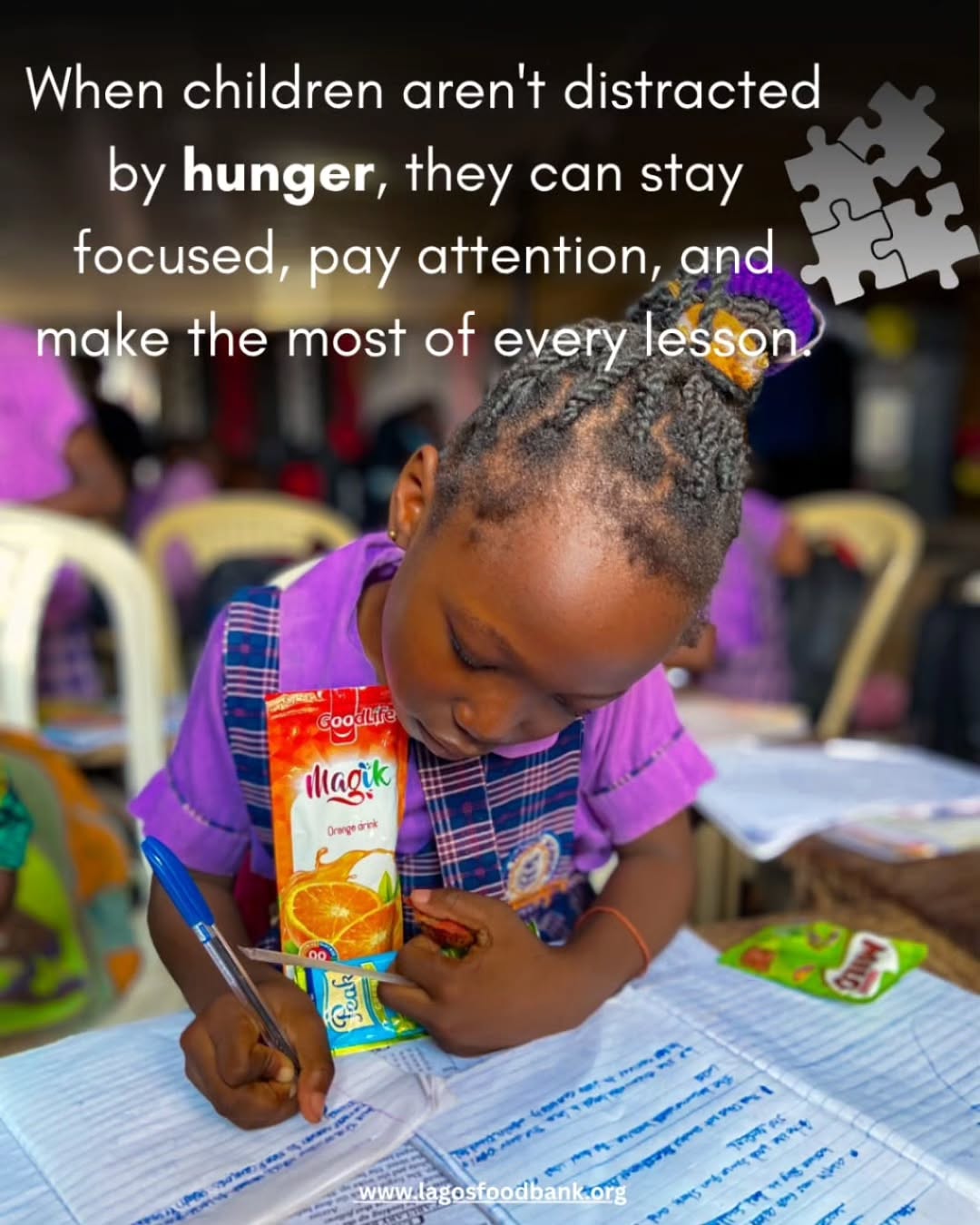
Deborah, like every other child in her classroom, goes to school with the hope of learning something new. But beyond the lessons, books and activities that fill her school day, adequate nourishment plays an important role in her ability to participate and learn.
For many children in underserved communities, however, hunger makes this difficult. It drains energy, affects concentration and makes it harder to engage with classroom activities. While other pupils follow the lesson, a hungry child may be struggling to focus beyond the discomfort of an empty stomach.
This is why access to nutritious meals is an important part of children’s education. A child’s ability to learn depends not only on what happens in the classroom, but also on whether their basic needs are met.
At the Lagos Food Bank Initiative, this understanding informs the Education Enhancement Intervention for Food Insecure Students (EDUFOOD). Through the programme, children attending low-cost private schools in underserved communities receive food support to ease the burden of hunger during school hours.
The impact extends beyond the meal. With access to food, children are better positioned to concentrate, participate in lessons and make the most of their time in school. Parents also have greater reassurance that their children’s nutritional needs are receiving attention during the school day.
For Deborah and other children reached through EDUFOOD, this support helps create an environment where hunger is less likely to stand between them and the opportunity to learn. It is a reminder that supporting education also means addressing the conditions that make learning possible.
Sustaining this effort requires collective action. Through donations, volunteering and partnerships, individuals and organisations can help reach more children with the nourishment they need to thrive.
No child should have to struggle with hunger while trying to learn. When we nourish children, we give them a better opportunity to learn, participate and reach their potential.