

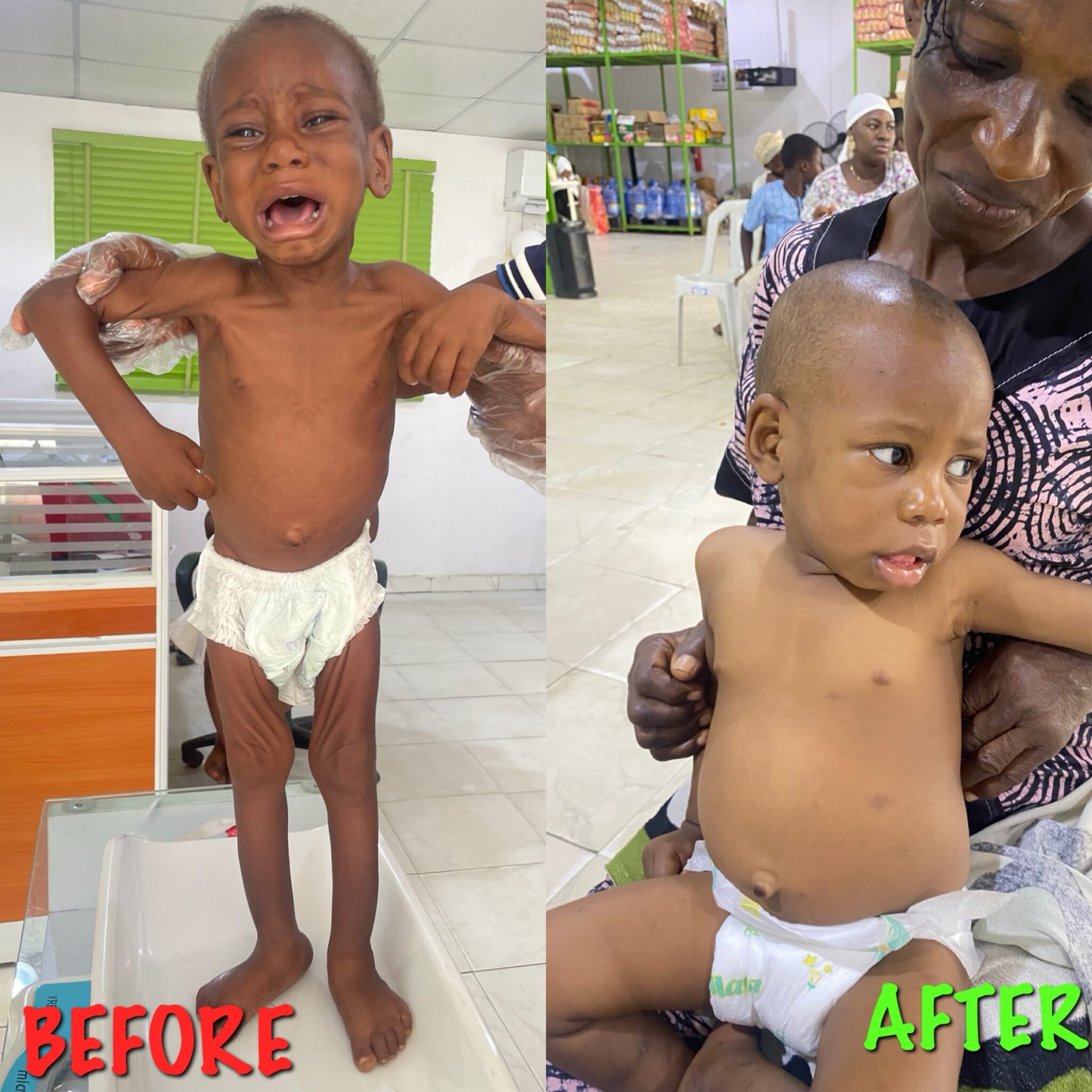
When Al-Amin‘s grandmother brought him to the Lagos Food Bank Initiative (LFBI), he was dangerously underweight. At 19 months, he weighed just 7.3kg. Referred from a primary healthcare centre, he was assessed and diagnosed with severe acute malnutrition before being enrolled in LFBI’s Nutritious Meal Plan Intervention for Vulnerable Mothers and Children (NUMEPLAN).
With access to nutrient-dense food and regular nutrition support, the expectation was that he would begin to gain weight. However, despite continued assistance, his measurements showed little improvement. Then his condition took a worrying turn. Al-Amin developed kwashiorkor, a severe form of malnutrition, and it became clear that food support alone would not be enough.
Concerned about his lack of progress, the dietitian engaged his grandmother in further discussions to understand what might be affecting his recovery. It emerged that Al-Amin had been experiencing recurrent diarrhoea and that some traditional childcare practices were contributing to his health challenges. His condition required more than nutritional support.
The dietitian referred him to a paediatrician and counselled his grandmother on the importance of medical treatment and changing the practices that were putting his recovery at risk. His grandmother took the advice seriously and sought medical attention at a general hospital.
At the next appointment, there was a noticeable improvement. With medical intervention addressing his diarrhoea and changes in his care, Al-Amin began responding better to the nutritional support provided through NUMEPLAN. His recovery progressed, and he eventually attained 75% of his ideal body weight.
Al-Amin’s experience highlights an important reality: malnutrition is not always resolved by providing food alone. Underlying illnesses, feeding practices and gaps in caregiver knowledge can all affect a child’s nutritional recovery. Effective intervention must therefore look beyond the immediate need for food and address the circumstances affecting a child’s health.
This is central to the work of the Lagos Food Bank Initiative. Through NUMEPLAN, LFBI combines food and nutrition support with counselling, follow-up and referrals where necessary, recognizing that children and families may need different forms of support to overcome malnutrition.
But reaching more children like Al-Amin requires collective commitment. Your donation can help sustain nutrition interventions, provide essential food support and extend assistance to vulnerable mothers and children. You can also partner with LFBI or volunteer your time to strengthen these efforts.