

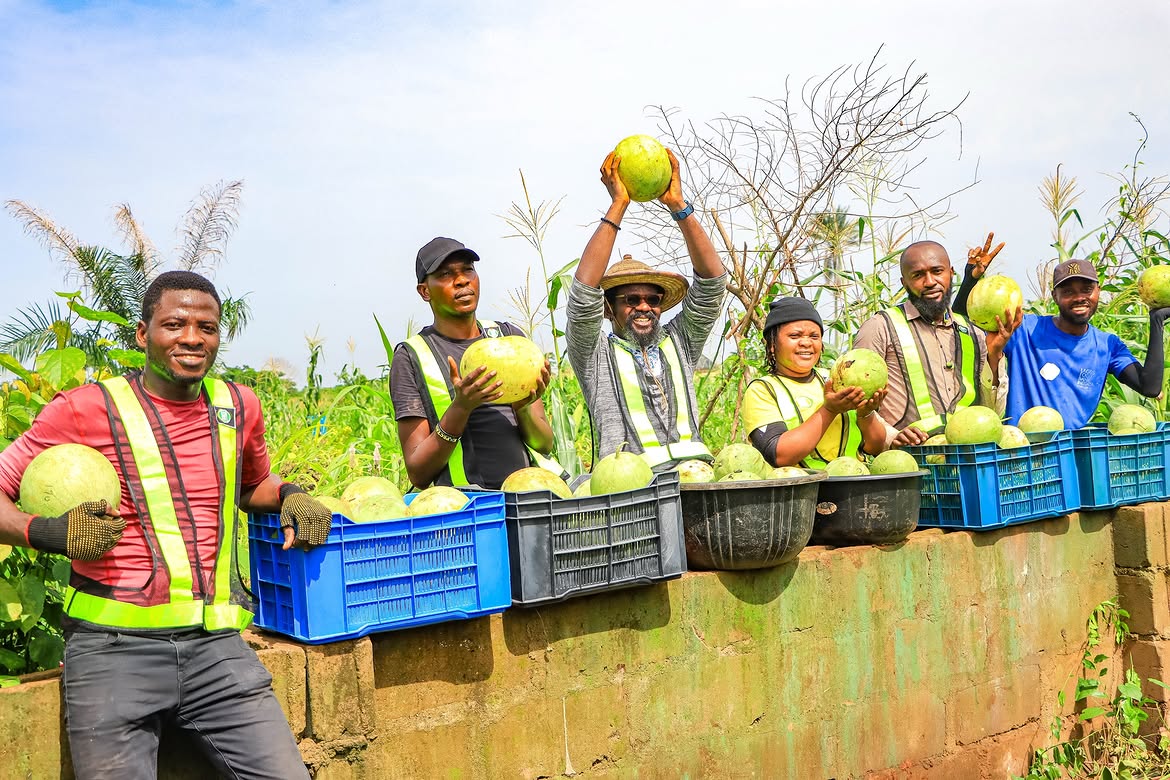
A crate of fresh produce sits unsold at a farm or market. It is still safe to eat, but perhaps it is no longer commercially attractive (funny-looking produce), has an excess supply, or may soon lose its freshness. Without intervention, food that could nourish a family may become waste.
But what if its journey could end differently?
At the Lagos Food Bank Initiative (LFBI), food rescue is about turning that possibility into impact. Through its Agricultural Recovery Program, LFBI partners with local farmers and food markets to salvage surplus agricultural produce and redirect rescued food to vulnerable households facing food insecurity. Its 2024 Annual Report also identifies Food Rescue: Recovering Surplus Food to Improve Food Security as part of its work.
The journey can begin with surplus produce from farmers and other points along the food value chain. Instead of allowing usable food to be lost, recovered food can make its way to the Food Bank, where it becomes part of a wider food security system serving people who need it most.
From the warehouse, that food begins another journey. From storage and sorting to packaging and distribution. What might have ended as food waste can instead become part of food supplies reaching a vulnerable household.
That is the power of food rescue: one side of the food system has surplus, while another is experiencing shortage. Food banking helps connect the two. LFBI describes itself as a food hub linking surplus food to people in need, demonstrating how food recovery can become a practical tool in the fight against hunger.
The challenge is significant. Food loss and waste in Nigeria means that valuable food, agricultural resources, labour and environmental resources can be lost even as many households struggle with food insecurity. LFBI’s Agricultural Recovery Feasibility Study identifies food loss as a major challenge and specifically proposes salvaging surplus agricultural produce for distribution to vulnerable households.
Every rescued item therefore represents more than food saved. It represents an opportunity to reduce waste, support food security, nourish a family, and sustain the environment.
And this work needs more hands.
Farmers, retailers, food businesses, manufacturers, individuals and corporate organisations can support food rescue by donating safe surplus food, partnering with LFBI, providing logistics or supporting the cost of recovering and distributing food.
Because the food that almost became waste can become someone’s meal instead.
Support LFBI’s food rescue efforts. Help us rescue more food, reach more vulnerable households and build a more food-secure Nigeria.