

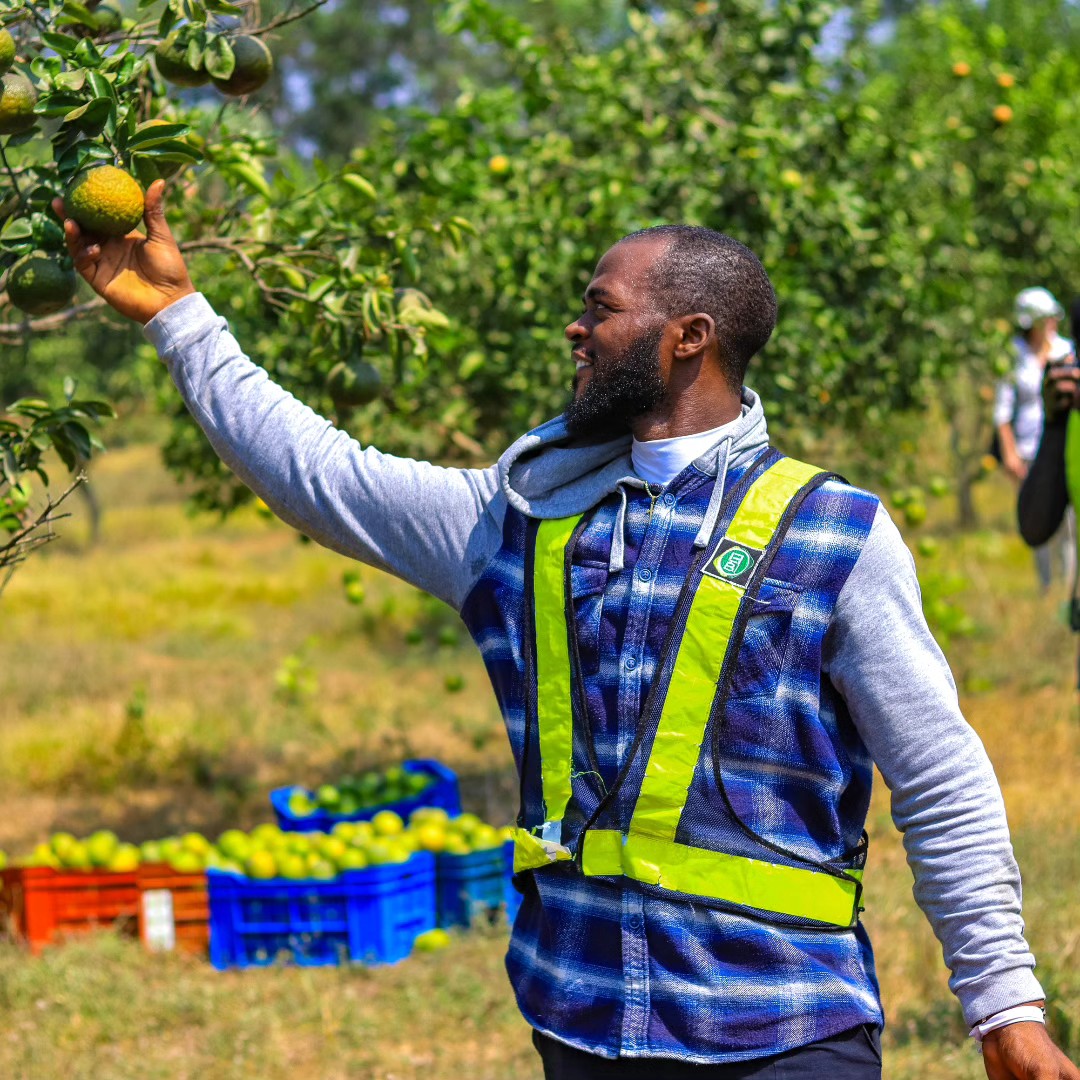
On a citrus farm just two hours north of Lagos, Sunday Olufemi no longer watches good fruit fall and rot in the fields. What was once waste now finds its way to families who need it most.
Like many growing cities, Lagos depends heavily on food transported from distant rural farms. Along the way, long supply chains lead to spoilage, higher costs, and unnecessary environmental strain. Too often, fresh produce is lost before it ever reaches a plate. In fact, Nigeria lost an estimated 30 to 40 million metric tonnes of food in 2025 alone due to post-harvest inefficiencies, driven largely by gaps in storage, transportation, and distribution systems.
Through the Agricultural Recovery Program (ARP), Lagos Food Bank Initiative is changing that story with Agricovery. The initiative rescues surplus produce directly from nearby farms, collects it the same day, and delivers it to LFBI warehouses for swift sorting and distribution. Since inception, the program has already rescued 49,534 kg of fresh produce that would otherwise have gone to waste.
For Olufemi, the impact is tangible. Volunteers recently recovered crates of ripe oranges that would have spoiled within days. Instead, they were quickly redistributed to mothers, children, and families in underserved communities through LFBI’s existing programs.
What once went to waste now nourishes lives. It’s a simple but powerful system. Farmers gain a reliable outlet for surplus produce. Families receive fresh, nutritious food. And shorter food miles mean less waste and a lighter environmental footprint.
In 2026, this work continues to expand, reaching more farms, mobilizing more volunteers, and building stronger partnerships to improve access to healthy food across Lagos.
Be part of the impact. Support the mission through volunteering, donations, or partnerships. Visit the Lagos Food Bank website or reach out to learn how you can help turn surplus into sustenance.