

Malnutrition remains one of the most critical public health challenges affecting children under five in Nigeria. Despite sustained efforts by government agencies and development partners, millions of children aged 0–5 continue to suffer from undernutrition, placing them at heightened risk of recurrent infections, delayed cognitive development, poor physical growth, and, in severe cases, mortality. The burden of malnutrition is closely tied to food insecurity, poverty, limited dietary diversity, suboptimal infant and young child feeding practices, and inadequate access to quality healthcare services.
As part of its commitment to breaking the cycle of hunger and malnutrition, the Lagos Food Bank Initiative implements the Nutritious Meal Plan Intervention for Vulnerable Mothers and Children (NUMEPLAN). This targeted nutrition program provides undernourished lactating mothers, malnourished infants, and food-insecure pregnant women with essential nutritional support, supplementary feeding, and structured nutrition education and counseling. The goal is not only to restore healthy growth in children but also to equip caregivers with the knowledge and tools needed to sustain long-term nutritional wellbeing within their households.
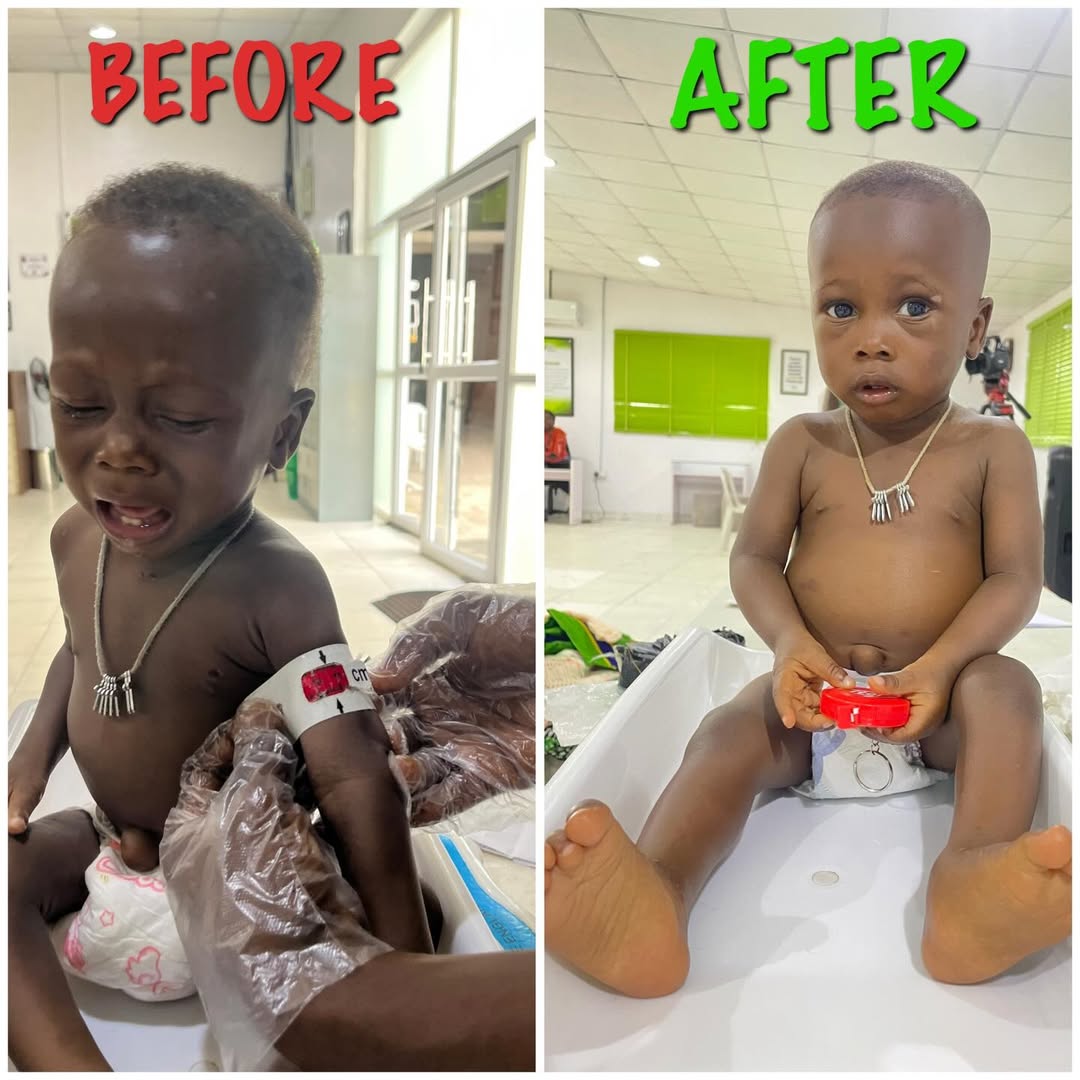
The story of Segun Olamilekan represents one of many impactful outcomes recorded under the NUMEPLAN initiative. Segun was enrolled in the program at 10 months of age following a referral from a Primary Health Care (PHC) facility, where he was diagnosed with Severe Acute Malnutrition (SAM). At enrollment, his weight-for-age was 4.5 kg, and his Mid-Upper Arm Circumference (MUAC) measured 10.3 cm, indicating critical nutritional vulnerability.
After five months of consistent intervention, including supplementary feeding support and personalized caregiver nutrition counseling, Segun has achieved significant catch-up growth. At 15 months, he is being successfully discharged from the program with a weight-for-age of 7.2 kg and a MUAC of 13.1 cm, reflecting marked improvement in his nutritional status.
While he has not yet reached the 80th percentile for weight-for-age, Segun is steadily progressing along a healthy growth trajectory. With his caregiver now equipped with improved nutrition knowledge and feeding practices, he is well-positioned to maintain continued growth and development.
Segun’s recovery underscores the effectiveness of community-centered nutrition interventions and reinforces the importance of early detection, sustained support, and caregiver empowerment in combating child malnutrition.