

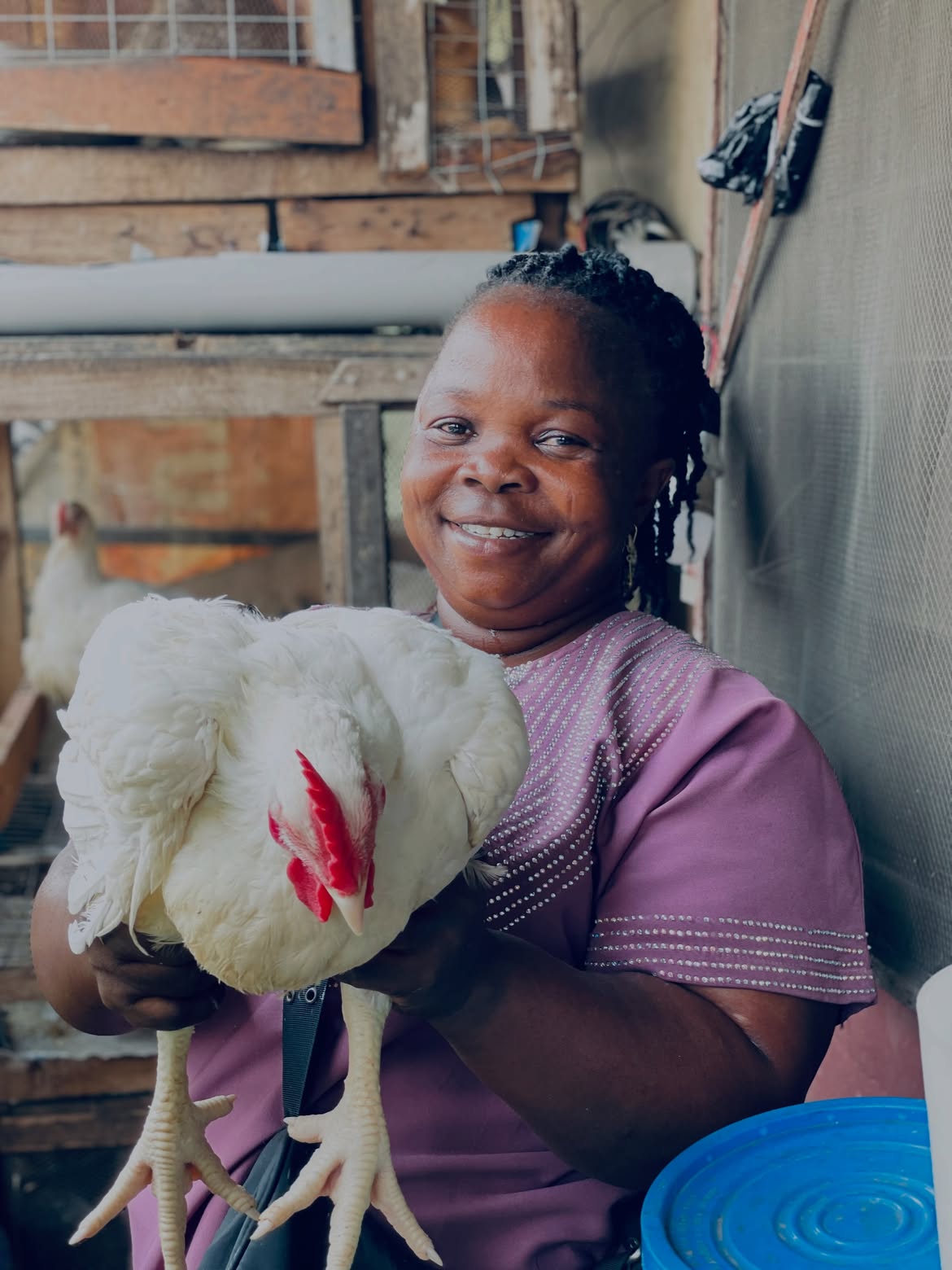
When Esther first walked through the doors of the Lagos Food Bank Initiative, she wasn’t looking for a handout or food support. She was looking for an opportunity.
Like many women navigating food insecurity and poverty in Nigeria, finding stable work had become increasingly difficult. Esther initially enrolled in LFBI’s Job Placement program due to challenges of affording necessities like food, hoping to secure a menial job and create a reliable source of income for her family.
But her journey took a different turn.
Through one of LFBI’s sustainability interventions, she discovered an opportunity to participate in the Family Farming Program. Rather than simply receiving a referral for gainful employment, she was equipped with resources and practical skills and knowledge to begin building a livelihood of her own, by growing vegetables and rearing poultry and snails.
She started small. With farming inputs and guidance, she began raising food for her household while developing the skills needed to generate additional income. What began as an intervention gradually became an opportunity for independence.
The change was not overnight. There were challenges, lessons and adjustments along the way. But with every step, she became less dependent on borrowing from friends and more capable of providing for her family.
Today, her story represents something bigger than a successful farming intervention. It demonstrates why addressing food insecurity and poverty requires more than putting food on the table. Immediate food assistance can provide critical relief, and employment can provide a means to self-reliance, but sustainable food security also means helping vulnerable families develop the means to feed themselves and earn a living.
This is the thinking behind LFBI’s integrated approach, responding to immediate hunger while creating pathways towards livelihood empowerment, resilience and sustainable food security.
For women in particular, access to productive resources and livelihood opportunities can have a ripple effect. When a woman gains the ability to earn, produce food or support her household, the benefits can extend to her children and the wider community.
Her journey began with a search for employment. It evolved into something more powerful: the opportunity to create her own source of livelihood.
And that is the difference between simply addressing today’s hunger and helping build a future where families have the capacity to thrive.
You can help create more stories like hers. Support Lagos Food Bank Initiative by donating, partnering, providing livelihood opportunities or supporting programs that empower vulnerable families.
Because the goal is not just to feed a family today. It is to help them build a future where they can feed themselves tomorrow.