

Food security is not only about whether food is available. It is also about whether families can afford it, access it consistently and provide the nourishment their households need.
Every year on 16 October, World Food Day draws attention to the global fight against hunger and the need to build food systems that work for everyone. The 2026 theme, “Innovate today. Nourish tomorrow,” calls for practical and inclusive solutions that improve access to nutritious food while strengthening the future of food systems.
For the Lagos Food Bank Initiative (LFBI), this call to action became tangible through a series of outreach activities that brought organisations together to support children and families experiencing food insecurity.
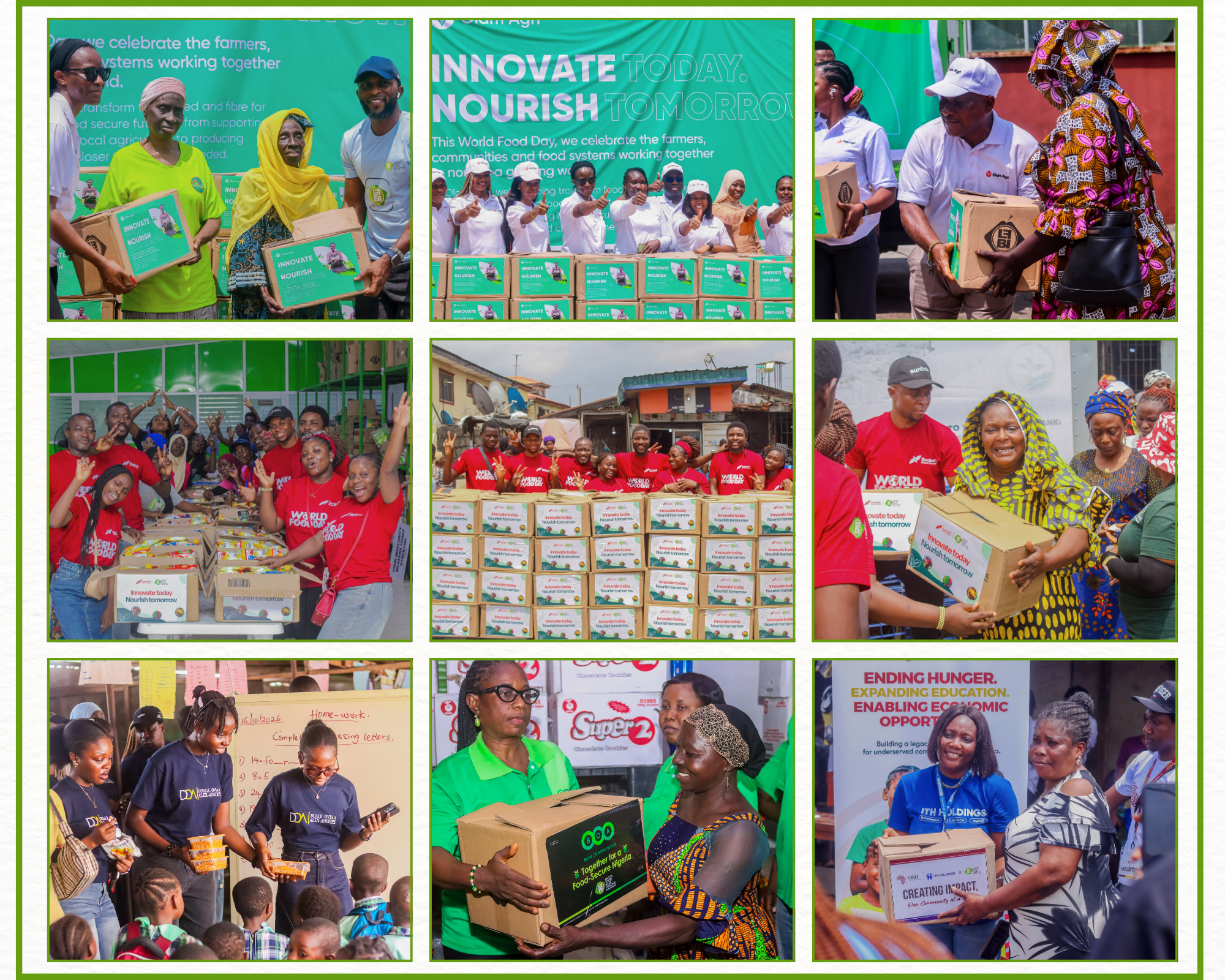
Throughout the World Food Day period, LFBI collaborated with corporate partners to deliver food assistance across underserved communities. Through its Temporary Food Assistance Program (TEFAP), essential food items were packaged and distributed to households facing difficulties meeting their daily food needs.
Olam Agri, returning for its fifth partnership with LFBI, helped kick off the activities with the distribution of 600 food boxes across Lagos, Kano, Nasarawa and Kwara. OED Foundation supported another TEFAP outreach in Iwaya, while Sunbeth Global Concepts partnered with LFBI for the first time to provide food boxes and other essential items to families in Ijesha. Bank of Agriculture and Access Bank also joined the effort to extend food support to vulnerable households.
The activities also reached beyond household food assistance. In partnership with Duale, Ovia & Alex-Adedipe (DOA Law), LFBI’s Education Enhancement Intervention for Food Insecure Students (EDUFOOD) provided meals to 1,000 schoolchildren, reinforcing the connection between nutrition, wellbeing and learning. JMG Limited also mobilised its team for a food assistance outreach in Majidun, Ikorodu, demonstrating how employee participation can translate corporate commitment into practical community support.
These activities represent more than a series of distributions. They demonstrate how partnerships can help extend food assistance to families, support children’s nutritional needs and mobilise resources towards a common goal. While immediate food support remains essential, building a more food-secure future also requires continued investment in nutrition, sustainable food systems and household resilience.
A food-secure future begins with the actions taken today. Ending hunger is a collective responsibility, and ensuring that everyone has access to nutritious food must remain a shared priority long after October 16.