

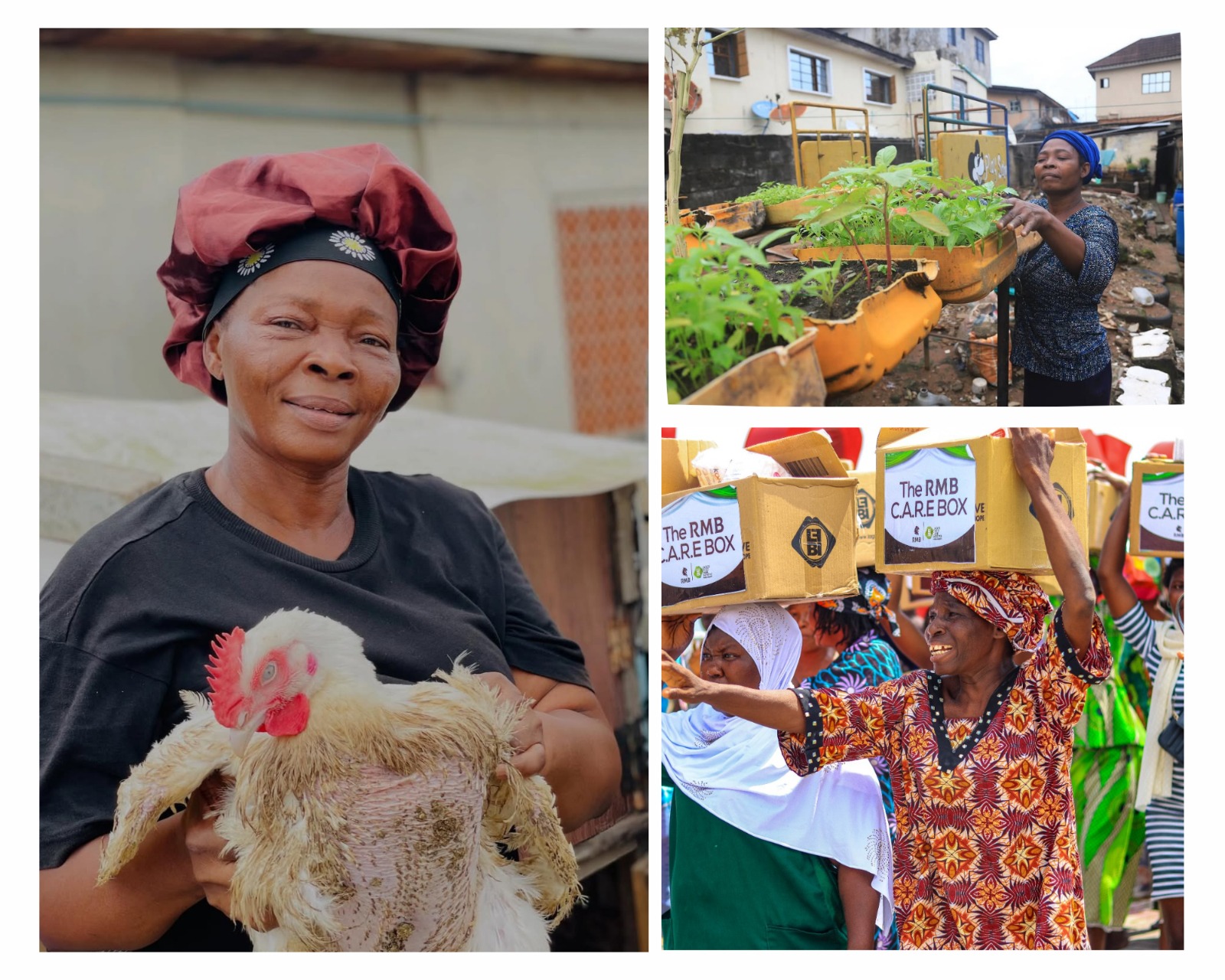
For years, every food distribution day brought renewed hope for Mrs. Adeola and her four children. As a widowed mother struggling to make ends meet, she depended on the Lagos Food Bank Initiative’s Temporary Emergency Food Assistance Program (TEFAP) to put nutritious meals on the table. Each food box she received was more than a package of staples; it was a reminder that her family had not been forgotten.
But while the food relief met her immediate needs, Mrs. Adeola dreamed of something greater: the opportunity to provide for her family independently.
That opportunity came through Family Farming, an empowerment initiative designed to help women and youth move beyond food assistance to sustainable livelihoods. She received practical training in backyard farming, along with the resources needed to cultivate vegetables, rear snails and poultry in her available backyard space.
What began as a small backyard practice soon flourished into a reliable source of fresh produce for her family’s consumption. As her harvests increased, she started selling the surplus within her community, generating a modest but steady income that helped cover household expenses and her children’s educational needs.
Today, Mrs. Adeola no longer waits for the next food distribution to feed her family. Instead, she harvests food from her own farm, earns an income from what she grows, and has become an inspiration to other families seeking a path toward self-reliance.
Her journey is a powerful reminder that while food relief saves lives, empowerment transforms them. Through the Lagos Food Bank Initiative, a family that once relied on Boxes of Hope has embraced a future rooted in dignity, resilience, and sustainability.