

In the riverside communities of Sagbokoji and Whala-koji, Lagos, the Atlantic surrounds everything, but provides almost nothing. The water is salty, unfit for drinking, cooking, or even bathing. Electricity is a rarity. The only primary healthcare centre serves tens of thousands across multiple communities, and reaching the mainland means a precarious canoe ride at dawn, often with infants in their arms. These are communities shaped by hardship and by an unyielding determination to survive, especially when supplies run low or livelihoods are disrupted.
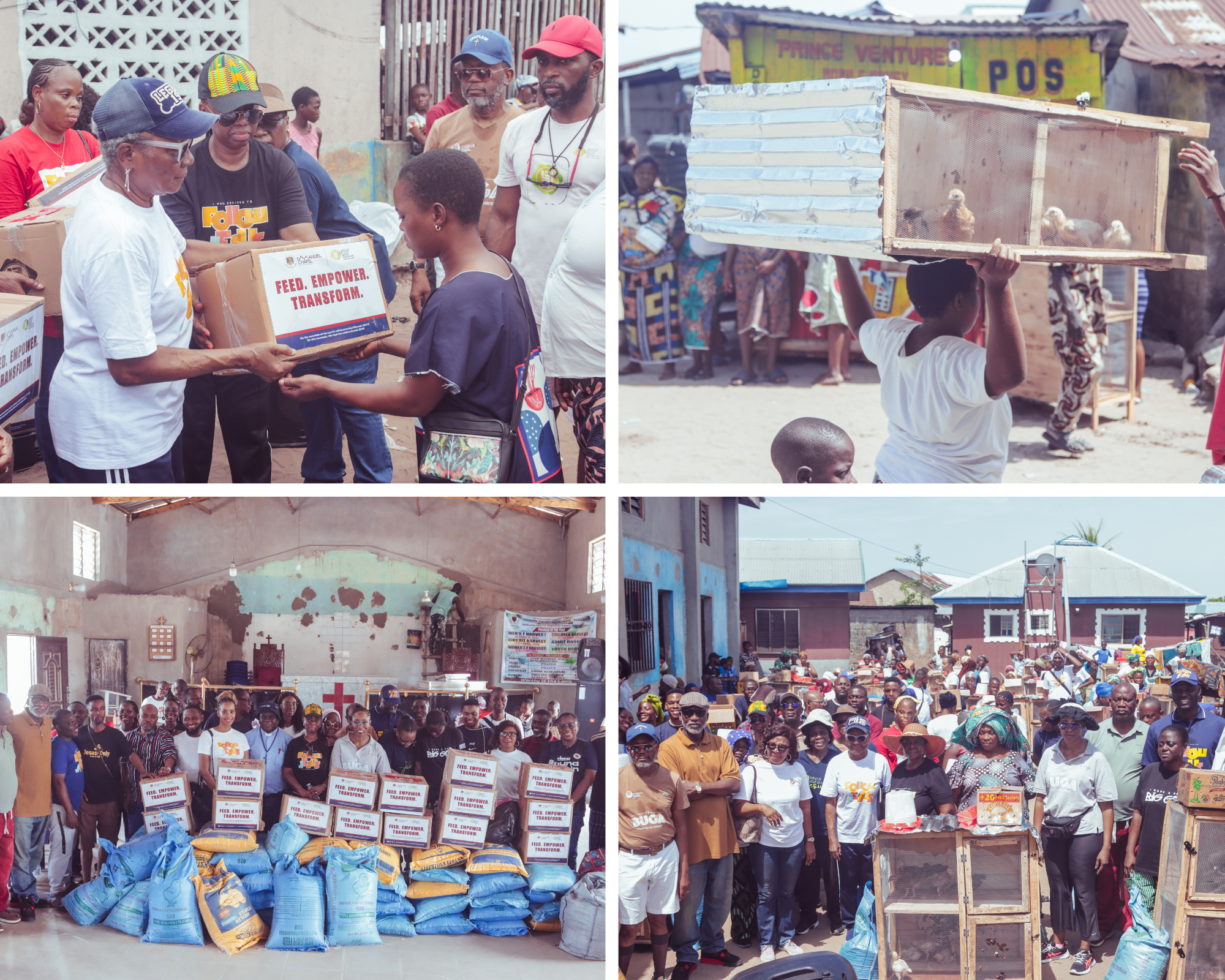
It was into this reality that the Lagos Food Bank Initiative (LFBI) arrived, partnering with Emmanuel Chapel to carry out a dual outreach. The intervention combined LFBI’s TEFAP (Temporary Food Assistance Program) with its Family Farming program, offering households not only immediate food relief but also a pathway to sustainable livelihoods.
Through the TEFAP program, carefully packaged food boxes were distributed to vulnerable families. For mothers who had stretched meager provisions to cover another week, and for elderly residents whose mobility makes regular market trips nearly impossible, the arrival of these boxes brought not just nourishment, but also a moment of stability in an otherwise uncertain season.
But the outreach recognized that true transformation requires more than short-term support. The Family Farming program provided beneficiaries with resources and guidance to begin small-scale agriculture, complemented by poultry rearing. Families received materials to cultivate their own food, alongside chicks and support to raise them, creating dual pathways to nutrition and income. In communities where access to markets is limited and self-reliance is survival, these tools offer a foundation for lasting change.
In one community, Karimot, a mother who had long relied on unpredictable assistance received both a food box and the resources to start her own poultry pen. For the first time, she spoke not of surviving the week, but of what she would harvest in the months ahead. In another household, Mama Shola, an elderly woman who had struggled to feed her grandchildren held the food box and wept, not from sorrow, but from relief that for today, and for the days to come, they would not go hungry.
Across Sagbokoji and Whala-koji, the impact was tangible. The outreach didn’t solve every challenge these communities face, but it showed something important: when support is dignified, collaborative, and sustainable, it does more than meet needs, it restores hope. For the women who know what it means to navigate isolation, to source clean water from distant towns, to organize boat rides for their children’s health, this support represents not just charity, but recognition. And for many, it was a turning point.