

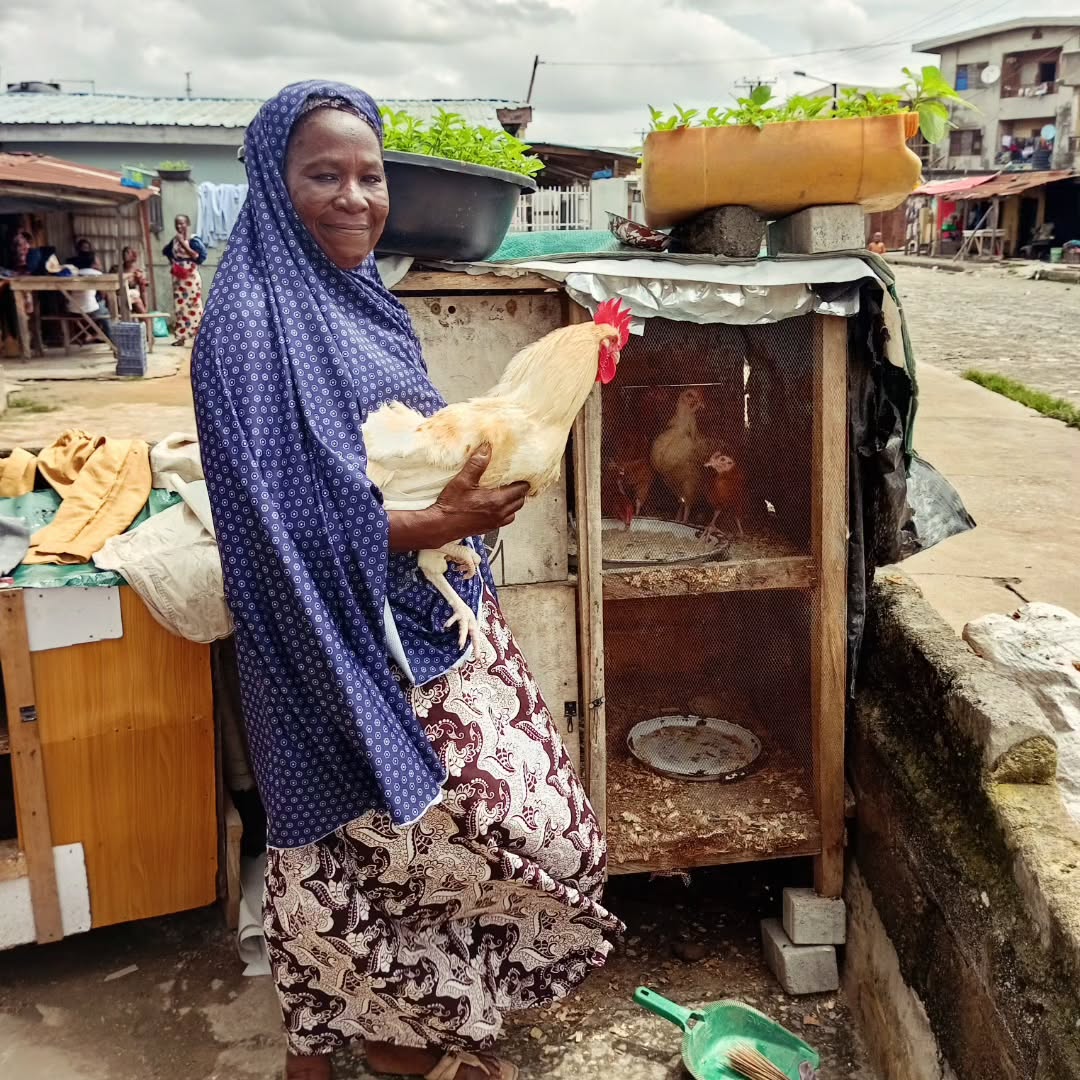
On a small patch of land behind her home, Mariam carefully tends to rows of vegetables, something she once never imagined she could do. Just months ago, feeding her three children was a daily struggle, as rising food prices and limited income made hunger a constant reality.
Today, that same space feeds her family and provides a source of income.
Mariam is one of many beneficiaries of the Family Farming Program at Lagos Food Bank Initiative.
Food insecurity remains a major challenge in Nigeria, with over 25 million people at risk, driven by rising costs and limited access to nutritious food. While emergency food support meets immediate needs, long-term solutions require empowering families to feed themselves.
Through the Family Farming Program, beneficiaries receive training, tools, and resources to start small-scale farming. For Mariam, this meant learning to grow vegetables and rear poultry. Within weeks, she began harvesting produce for her household and selling surplus within her community.
Her story reflects a broader impact. Families are transitioning from food aid recipients to food producers, gaining income, improving nutrition, and building resilience. Studies show that empowering smallholder farmers; who produce up to 80% of food in developing regions; is critical to tackling hunger sustainably.
Sustainable agriculture is more than growing food. It restores dignity, creates opportunity, and builds self-reliant communities.
As more families gain the capacity to produce and earn, it becomes a powerful and scalable pathway to ending hunger.