

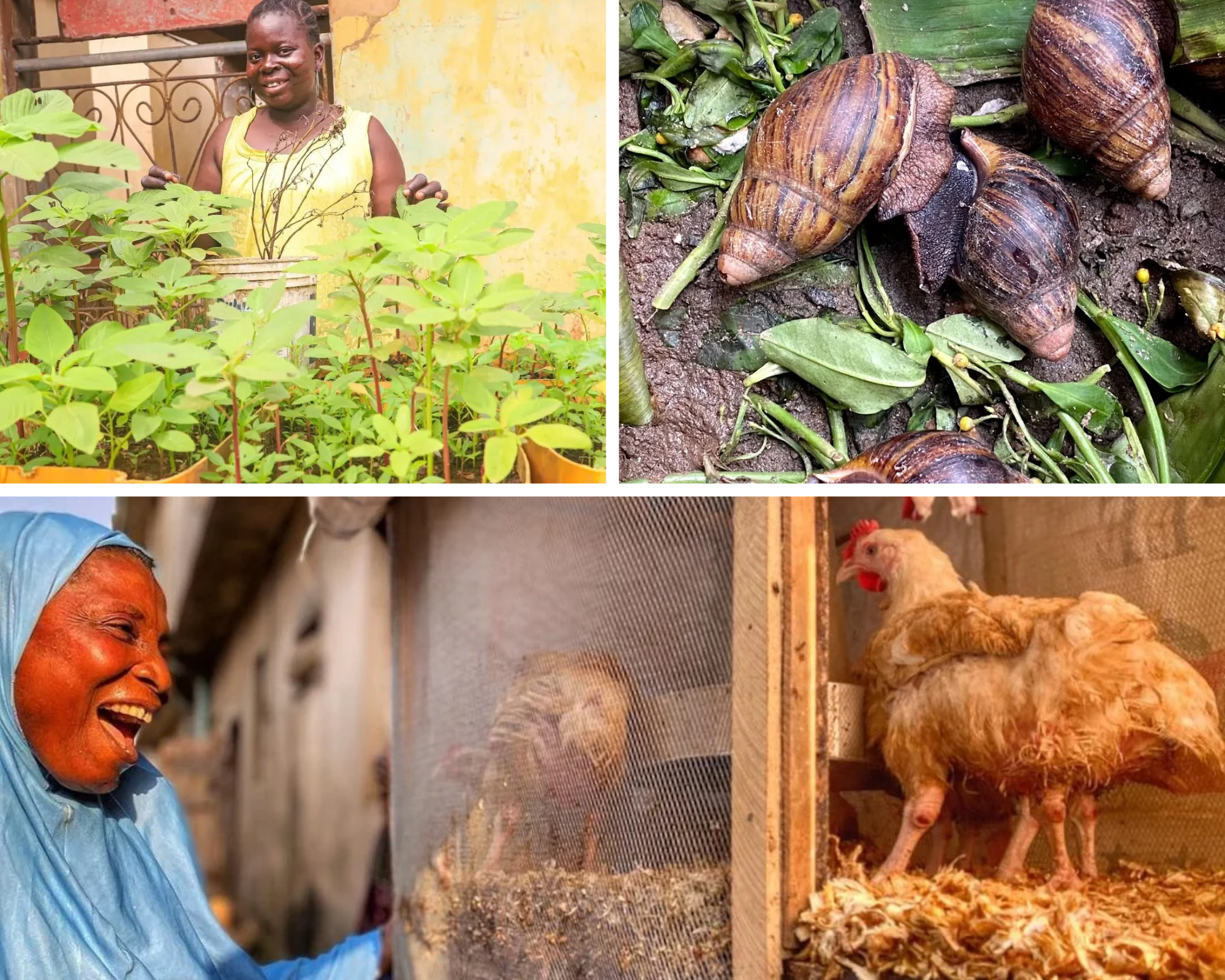
As cities like Lagos continue to expand and populations grow, ensuring access to affordable and nutritious food is becoming increasingly challenging. Rising food prices, limited agricultural land, climate change, and food supply disruptions have made food insecurity a growing concern, particularly among low-income urban households. However, one promising solution is bringing agriculture closer to where people live: urban farming.
Urban farming involves growing food within cities and surrounding communities using available spaces such as backyards, rooftops, balconies, vacant plots, and community gardens. By transforming underutilized spaces into productive gardens, households and communities can grow fresh vegetables, fruits, and other food crops as well as rear chickens, goats, grasscutters, and snails for consumption and, in most cases, additional income.
Beyond improving access to fresh and nutritious food, urban farming offers significant environmental benefits. It can reduce dependence on long-distance food transportation, minimize food losses along supply chains, encourage composting, and promote more sustainable use of resources. It also creates opportunities for young people and women to develop agricultural skills, generate income, and participate in local food production.
For a country like Nigeria, where urban populations continue to grow and many households struggle with the rising cost of food, embracing urban agriculture can complement existing food security interventions. Community gardens, household vegetable farming, poultry, and small-scale agricultural initiatives can help improve food availability, strengthen community resilience, and promote healthier eating habits.
At Lagos Food Bank Initiative (LFBI), they recognize that sustainable food security requires more than food distribution; it also involves empowering communities with practical solutions that strengthen their ability to access and produce food. Through initiatives such as the Family Farming Program, they support agricultural empowerment and encourage sustainable food production.
Urban farming reminds us that food production does not have to be confined to rural farmlands. With the right knowledge, resources, and community participation, even small urban spaces can contribute to a more sustainable food system.
The solution to hunger may be growing closer to home than we think. By turning available spaces into productive gardens, we can cultivate healthier communities, protect the environment, and grow a more food-secure future, one backyard farm at a time.