

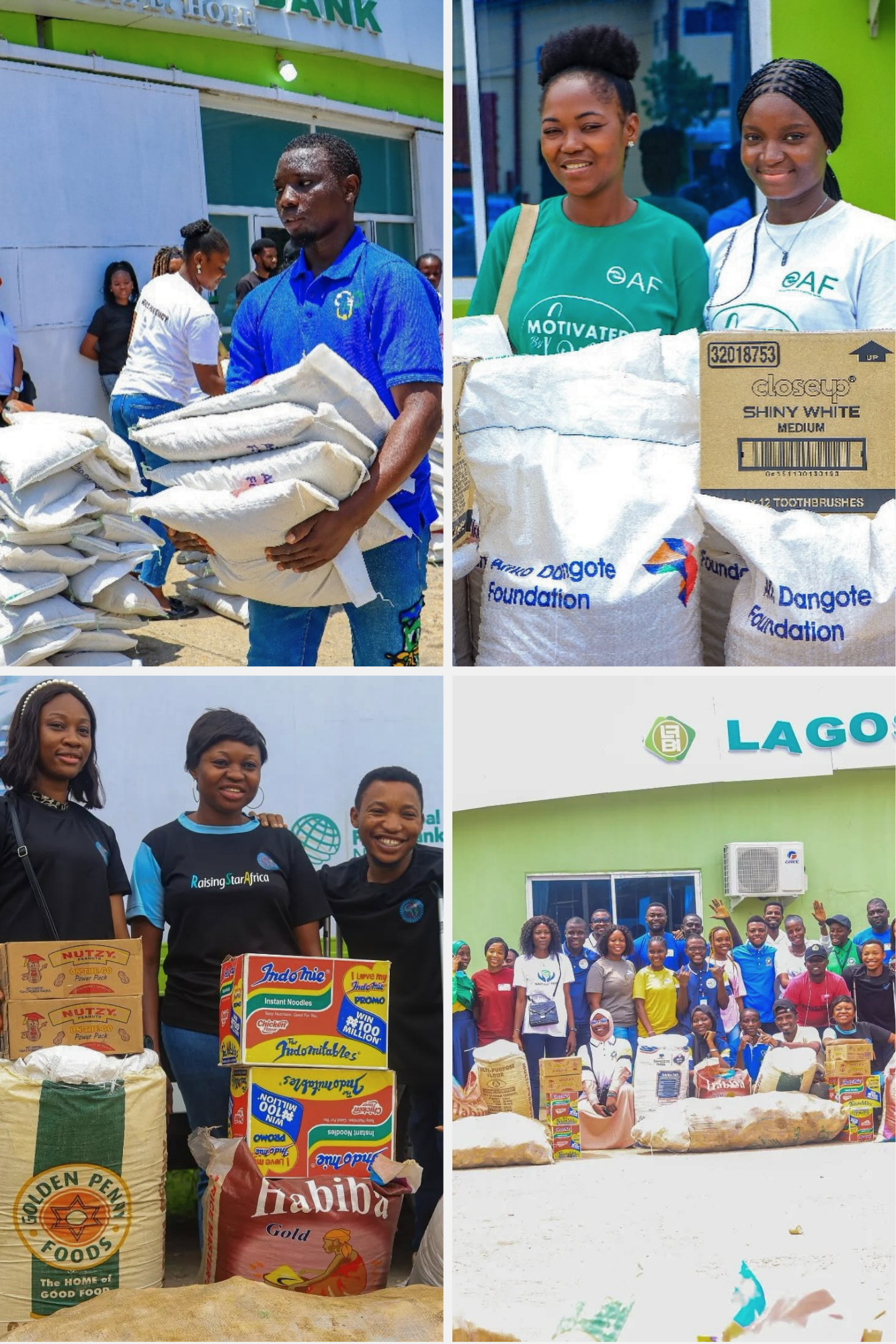
When Lagos Food Bank Initiative staff and volunteers loaded vans with food items on a Friday in late February 2026, the destination was not a single warehouse but seven beneficiary organizations across Nigeria. The delivery, marking World NGO Day, was part of the Food Bank Network Nigeria (FBNN) program, enabling partners to quickly reach households facing food shortages.
A representative of a beneficiary organization from Rivers State recalled that they had run out of emergency supplies just the day before, noting that the timing showed the network working exactly as it should.
Launched in 2020, FBNN operates as an initiative of the Lagos Food Bank Initiative, connecting with local food banks and credible non-profits to extend hunger relief beyond what a single organization could possibly achieve. Rather than expanding directly into every region which would be highly capital intensive, LFBI provides food grants and relief packages to trusted partners or beneficiary organizations like they are fondly called, who are established in other states and far-to-reach communities, handling last-mile distributions.
Since its inception, FBNN has supported over 540 local non-profits, reaching about 780,000 beneficiaries across Lagos and 15 other states including Kano, Borno, Kaduna, Niger, Abuja, Plateau, Taraba, Rivers, Oyo, Osun, Ekiti, Ogun, Imo, and Yobe.
The process remains simple and accountable. NGOs submit applications, selected partners are contacted when they have been scheduled to receive food and essential supplies, and LFBI follows up with monitoring and technical assistance to strengthen reporting and effectiveness of community engagement.
Recent activities show the model in action. In June 2025, FBNN worked with 19 organizations across Southwest Nigeria, combining food distribution with sustainability training. That same month, seven nutrition-focused NGOs received grants to support vulnerable households nationwide, while World Hunger Day efforts extended support to nine partner organizations.
For the beneficiary organization in Rivers, that World Hunger Day distribution stood out. They recounted serving 300 families within a week and shared the story of a grandmother who had been skipping meals so her grandchildren could eat, adding that moments like that made the entire process worthwhile.
By working through a network, FBNN reduces duplication of effort, eases logistics in far-to-reach areas, and ensures support is delivered in ways that fit local realities, while LFBI focuses on sourcing, coordination, and distribution within its environs.
You can support this effort by donating food items, volunteering for improved logistics, or partnering as a corporate donor or beneficiary organization.
Through collaboration, FBNN continues to turn surplus into steady support for families across Nigeria.