

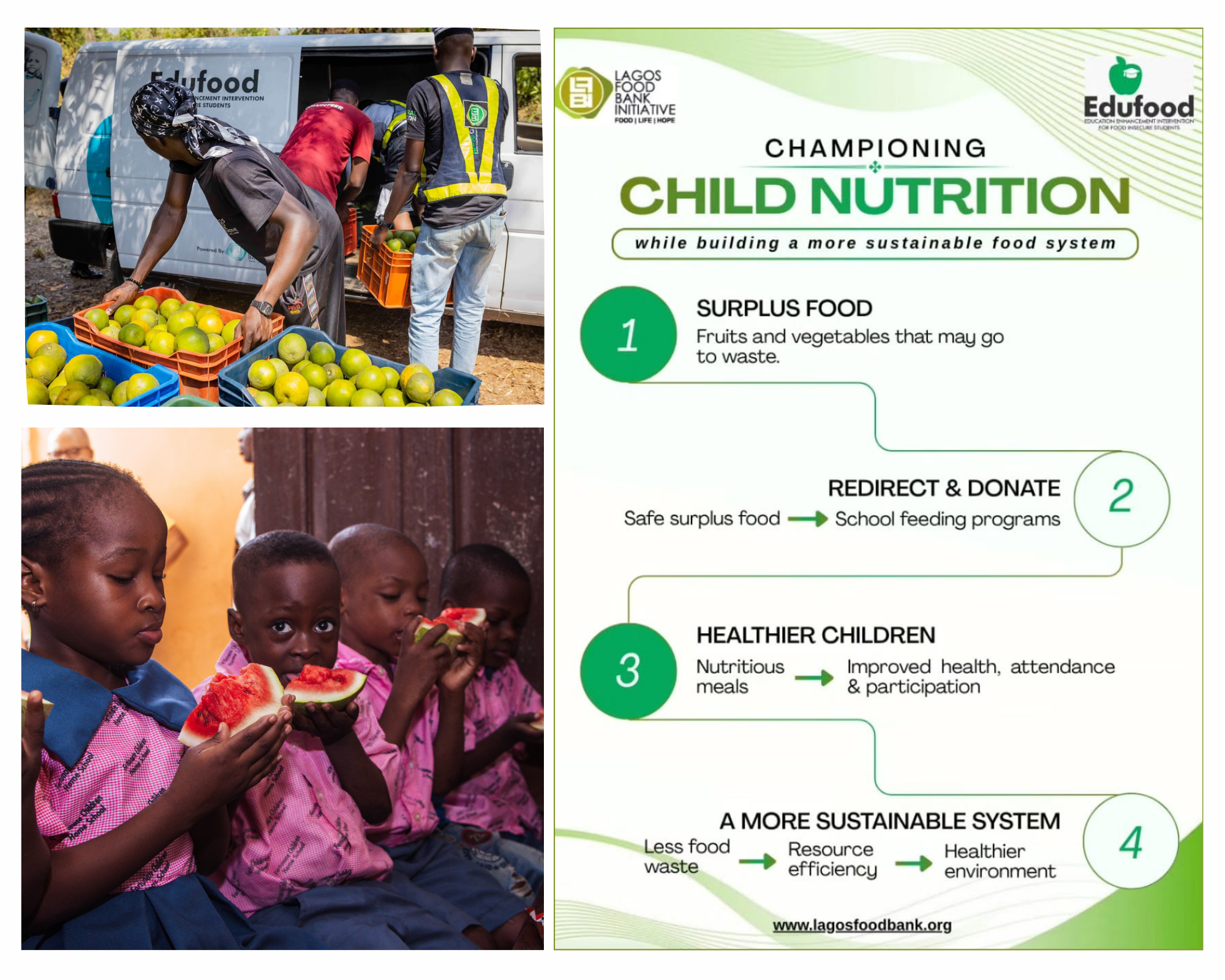
At the end of a market day, a basket of fruits and vegetables may still be perfectly safe to eat, yet there is a chance they will never make it to someone’s plate.
This is one of the contradictions within our food system. While food is wasted, many children still struggle to access the nutritious meals they need to grow, learn and thrive.
But what if surplus food could find a new purpose?
At the Lagos Food Bank Initiative, safe surplus food can be redirected to where it is needed most, including school feeding programmes under the Education Enhancement Intervention Programme (EDUFOOD).
A fruit or vegetable that might otherwise be discarded can become part of a nourishing meal for a child. And that meal is more than food on a plate. It can support better health, school attendance, participation and the ability to concentrate in class.
The impact does not stop with the child.
When safe surplus food is recovered and redirected, fewer resources are wasted. Food that has already been produced, transported and made available for consumption gets another opportunity to serve its purpose. At the same time, children receive nourishment that supports their development.
This is what a more sustainable food system can look like: finding ways to make better use of the food we already have while ensuring that more people can benefit from it.
Because sometimes, the difference between food being wasted and a child being nourished is simply where that food goes next.
Through food recovery and programmes like EDUFOOD, LFBI is working to make sure that safe surplus food does not have to become waste when it can still become nourishment.