

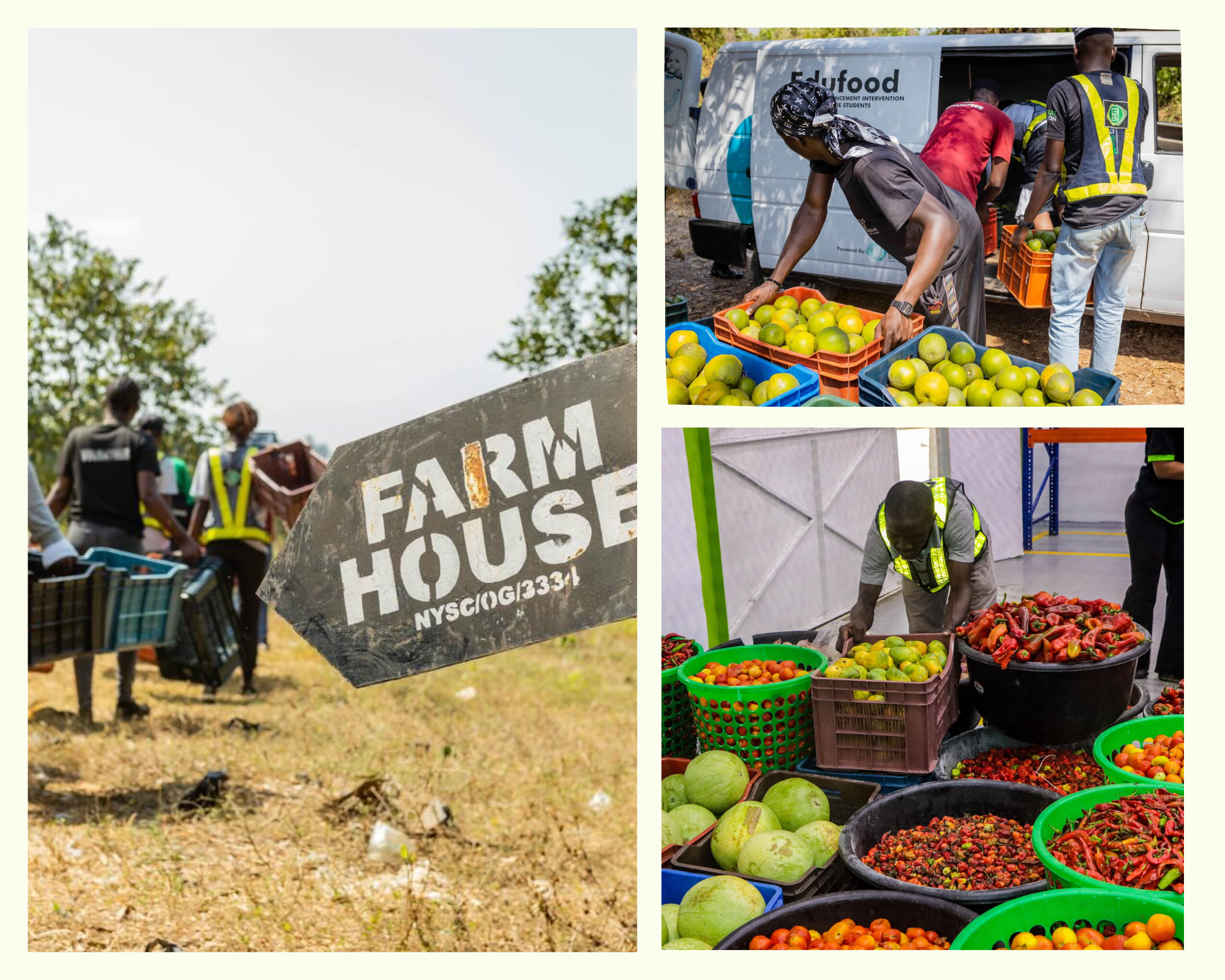
When Mrs. Adeola, a smallholder farmer, harvests more produce than she can sell, the unsold produce can quickly become waste. But what if that food could still serve a purpose?
At the Lagos Food Bank Initiative, this question is at the heart of a more sustainable approach to food. A circular food system keeps food and agricultural resources in use for as long as possible, finding new value in what might otherwise be discarded.
Through the Agricultural Recovery Programme, surplus farm produce that might have been left to spoil can be rescued and redirected to vulnerable families. What could have become a loss becomes nourishment for a household experiencing food insecurity.
But not every form of organic waste is suitable for human consumption. This is where the Insectifood Programme comes in. Using Black Soldier Fly larvae, suitable organic waste can be transformed into high-protein animal feed and nutrient-rich organic fertiliser.
The cycle begins to take shape:
Surplus food becomes nourishment. Organic waste becomes animal feed. Fertiliser supports healthier soil. Healthier soil supports new crops. New crops create food and livelihoods.
This approach tackles several challenges at once. It reduces food waste, creates useful agricultural inputs, supports farmers, and opens opportunities for sustainable livelihoods, particularly for women and young people.
It also changes the way waste is understood.
What if waste is not the end of a resource, but the beginning of another opportunity?
At the Lagos Food Bank Initiative, food rescue, Agricultural Recovery, Family Farming, and Insectifood demonstrate how connected solutions can address hunger, waste, environmental challenges, and livelihoods.
The goal is not simply to waste less. It is to keep more value within the food system, so that what was once discarded can help nourish people, support farmers, restore resources, and create new possibilities.
That is the power of a circular food system.