

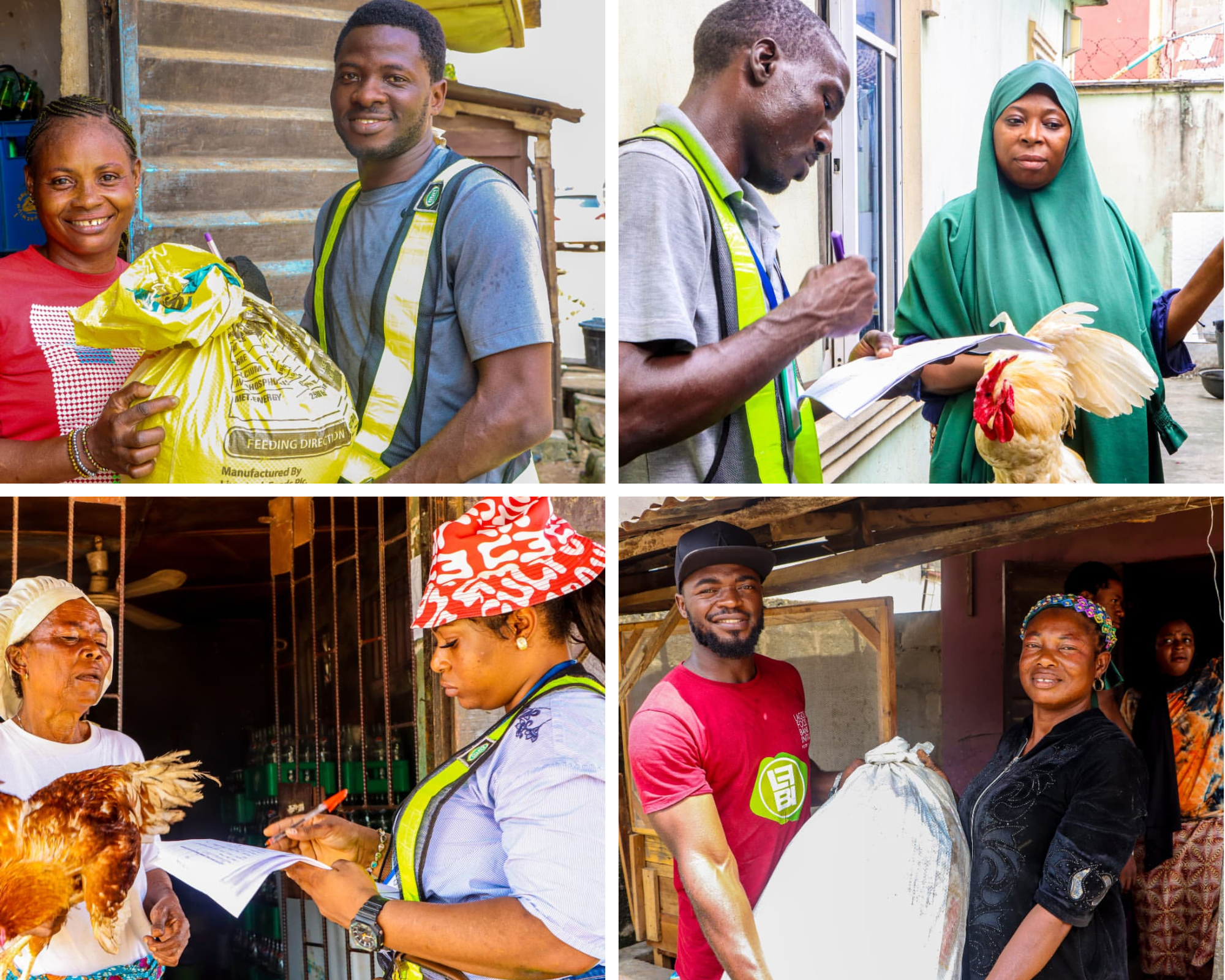
When a food box leaves the Lagos Food Bank Initiative (LFBI) warehouse, the journey does not end with distribution.
For LFBI, the more important question is: What happens next?
Does the food reach the family it was intended for? Does a malnourished child begin to recover? Does a school meal help a hungry child stay focused in class? Can a family supported through agriculture produce food and generate income beyond the initial intervention?
These are the questions that make Monitoring and Evaluation (M&E) an essential part of LFBI’s work.
Beyond Counting Food Boxes
Impact is not measured only by the number of food items distributed. LFBI tracks program activities and outcomes to understand whether interventions are improving the lives of beneficiaries.
Through programs such as NUMEPLAN, nutrition indicators can help track the progress of vulnerable children and mothers receiving nutritional support, education and follow-up. In EDUFOOD, the focus extends beyond meals to outcomes such as students’ nutrition, attendance, participation and learning.
Similarly, through Family Farming, monitoring visits help assess whether beneficiaries are successfully managing their poultry, snail and vegetable farms, applying the knowledge received and progressing towards greater food and economic security.
When Numbers Tell a Human Story
Consider a child enrolled in NUMEPLAN who arrives malnourished. A measurement taken during the initial assessment establishes a baseline. Subsequent assessments help the team determine whether the child’s nutritional condition is improving and whether additional support may be required.
Behind that measurement is a very human story; a child becoming healthier, a caregiver gaining knowledge and a family gaining hope.
The same principle applies across LFBI’s interventions. Data helps the organization identify what is working, understand challenges and make informed decisions about how programs can be improved.
Accountability That Strengthens Impact
M&E also helps LFBI remain accountable to the people, donors, partners and volunteers who make its work possible. By documenting activities, outputs and outcomes, the organization can better demonstrate how resources are being transformed into meaningful change.
Ultimately, impact measurement is not about numbers for numbers’ sake. It is about knowing whether the lives behind those numbers are changing.
Every assessment, follow-up visit, beneficiary feedback and program report brings LFBI closer to answering one critical question: Are we making a lasting difference?
And by continually measuring, learning and improving, LFBI can ensure that its response to hunger goes beyond immediate relief, towards better nutrition, stronger livelihoods, and more resilient communities.
Because when we measure impact, we don’t just count what we have done; we understand what difference it has made.