

Food security remains one of Africa’s most pressing development challenges. Despite the continent’s significant agricultural potential, hunger, food insecurity and malnutrition continue to affect millions of people. The FAO’s latest regional assessment notes that Africa remains off track to achieve Sustainable Development Goal 2, with hunger and food insecurity continuing to rise and progress on key nutrition targets remaining slow.
The challenge is driven by several interconnected factors. Climate change, conflict, poverty, rising food prices, limited infrastructure, post-harvest losses and inadequate investment in agriculture can all affect the availability and affordability of nutritious food. Smallholder farmers, women and low-income households are particularly vulnerable to these pressures.
Addressing food insecurity requires more than producing more food. Africa needs resilient and sustainable food systems that connect production, storage, processing, markets, nutrition and livelihoods. The African Union’s CAADP Strategy and Action Plan 2026–2035 prioritises sustainable food production, increased investment, food and nutrition security, equitable livelihoods, resilient agrifood systems and stronger governance. The strategy targets a 45% increase in agrifood output and a 50% reduction in post-harvest losses by 2035.
Practical solutions include investing in climate-smart agriculture, irrigation and storage infrastructure; strengthening local food value chains; improving farmers’ access to finance and markets; reducing food loss and waste; expanding nutrition-sensitive programs; and empowering vulnerable households with sustainable livelihoods.
In seeking the above solutions, major stakeholders in African society have significant roles to play which vary in capacity.
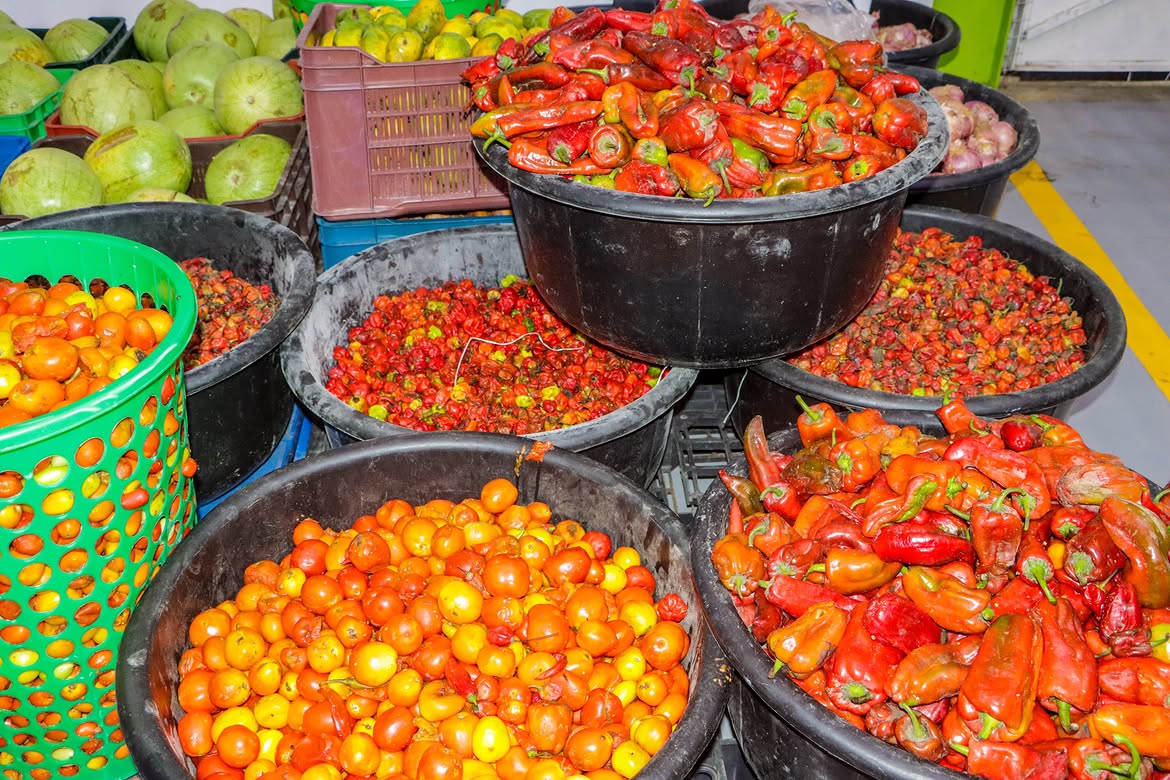
The Lagos Food Bank Initiative (LFBI), a nonprofit nutrition-focused organization, provides an example of how these approaches can work together at community level. Beyond immediate food assistance, the Food Bank’s programs address nutrition, education, agriculture, and livelihoods. Its Agricultural Recovery Program, for instance, focuses on rescuing surplus agricultural produce, reducing post-harvest losses and redistributing recovered food through nutrition-focused programs to underserved communities.
Similarly, LFBI’s Family Farming Program is designed to help families use agriculture to improve their quality of life while reducing hunger and poverty, demonstrating the importance of combining immediate support with pathways towards greater self-reliance.
Ultimately, sustainable food security in Africa will require collective action. Governments, farmers, businesses, development organisations, food banks and communities all have a role to play in creating food systems that are productive, inclusive, and resilient.
Africa has the resources and potential to feed its growing population. The challenge is ensuring that food is produced sustainably, preserved effectively, reaches the people who need it, and that vulnerable households have the means to access nutritious food consistently.
Building a food-secure Africa is not simply about fighting hunger today, it is about creating food systems capable of nourishing generations to come.