

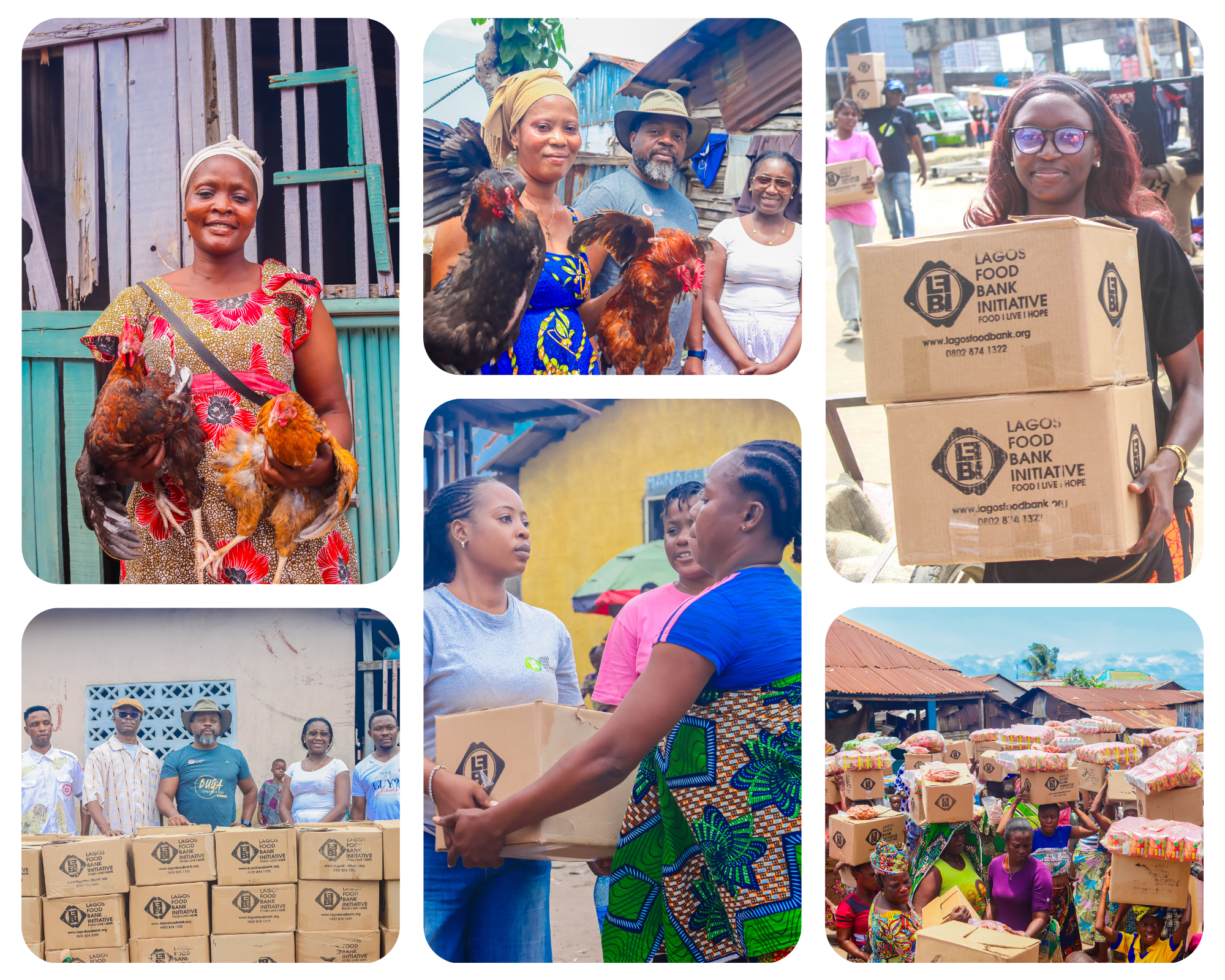
In early September 2026, the Lagos Food Bank Initiative (LFBI), in partnership with Emmanuel Chapel, stepped into the final phase of its Adopt-a-Community Initiative in the riverine communities of Sagbokoji and Whala-koji in Amuwo-Odofin Local Government Area. The closing outreach combined a Temporary Food Assistance Program (TEFAP) food distribution with a Family Farming Monitoring & Evaluation (M&E) exercise, marking the culmination of six months of consistent support that began in April 2026.
Accessible only by a 15–20 minute boat ride, these underserved island and riverine communities face significant challenges, including limited access to clean water, electricity, healthcare, and reliable food sources. From the very first intervention in April, the partnership went beyond one-off relief. It was designed to Feed, Empower, and Transform — providing immediate food assistance through TEFAP while equipping households, particularly women, with the tools and knowledge for sustainable backyard poultry farming through the Family Farming program.
Over the six months, families received nutritious food boxes that offered immediate relief, alongside starter kits for urban backyard poultry farms (including cages, chicks, feed, feeders, drinkers, and multivitamins). Regular follow-up visits and the final M&E exercise allowed the team to assess progress, document growth, and reinforce best practices so that the gains made would continue long after the formal partnership ended.
The final outreach was both a celebration and a point of reflection. It highlighted how consistent presence and intentional programming can strengthen household resilience in hard-to-reach communities. Beneficiaries who once relied solely on external support are now better positioned to produce food for their families and generate modest income, building greater self-sufficiency against future shocks.
Dr. Michael Sunbola, Executive Director of LFBI, expressed deep appreciation to Emmanuel Chapel for their unwavering commitment over the six-month journey. He noted that lasting change happens when partners are willing to return, monitor progress, and walk with communities until sustainable foundations are laid.
This final phase stands as a powerful testament to what is possible when faith-based organisations and community-focused initiatives come together with a shared purpose. From the first boat ride in April to the closing TEFAP and M&E exercise, the partnership has put food on tables, skills in hands, and hope in hearts across Sagbokoji and Whala-koji.