

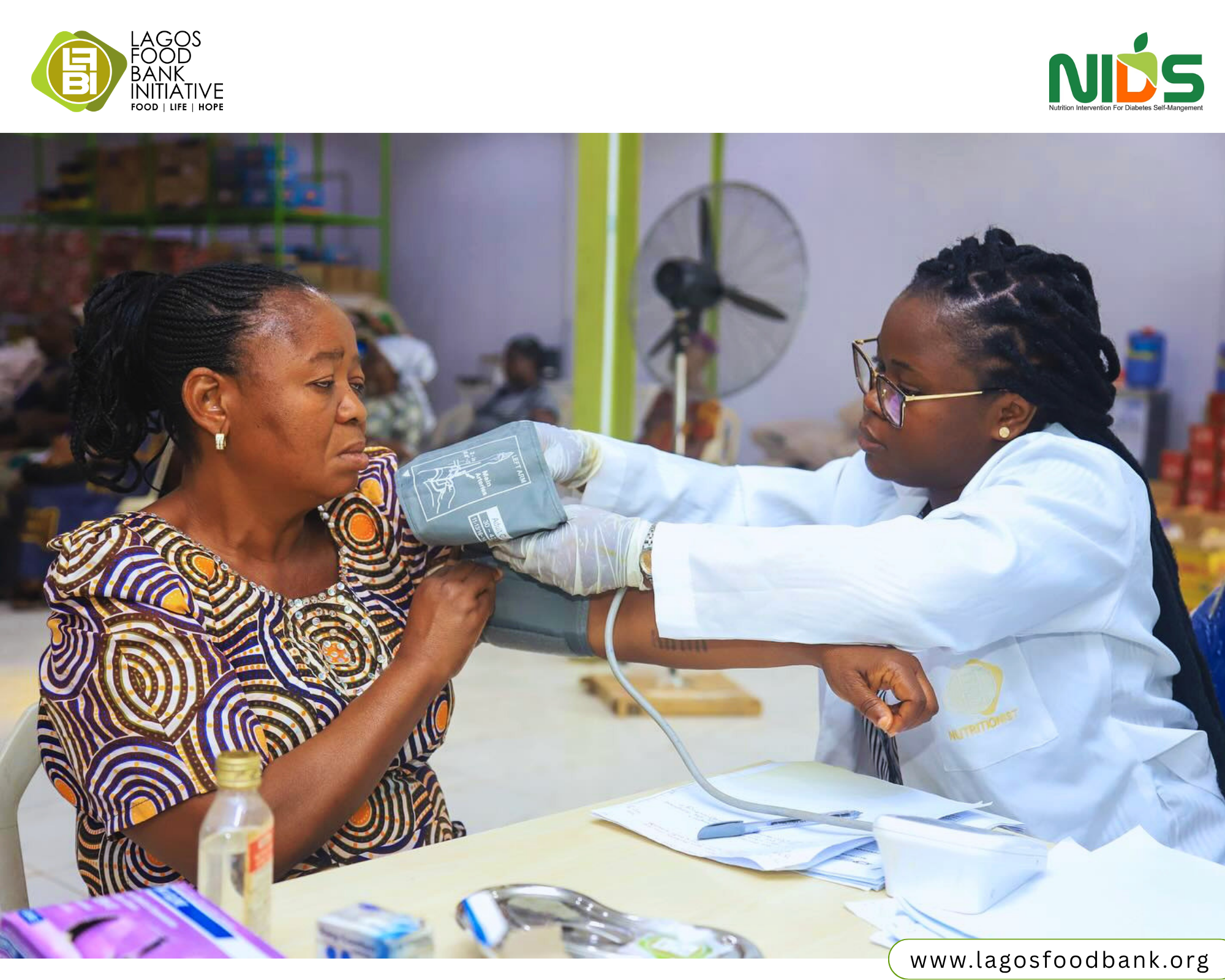
For someone living with diabetes, food is more than something to eat. What is on the plate, how much is eaten and how regularly meals are taken can all be important parts of managing the condition.
But for someone who is also struggling to afford food, making healthy choices is not always that simple.
In Nigeria, an estimated 3 million adults aged 20 to 79 were living with diabetes in 2024, according to the International Diabetes Federation. Nigeria has the highest number of adults living with diabetes in the IDF Africa Region.
For people living on limited incomes, diabetes management can become even more difficult when nutritious food, regular blood glucose monitoring and other aspects of care are financially out of reach. Food insecurity can make it harder to consistently follow a diabetes-appropriate meal plan, creating another layer of difficulty for people already managing a lifelong condition.
This is the gap the Lagos Food Bank Initiative’s Nutrition Intervention for Diabetes Self-management (NIDS) was created to address.
NIDS supports food-insecure adults living with diabetes in low-income communities by providing diabetes-appropriate food alongside nutrition education and support. Beneficiaries receive nutrition counselling and blood sugar testing, with guidance on practices such as dietary diversity and portion control that can support diabetes self-management.
LFBI also recognises that food insecurity does not exist in isolation. Through additional support and livelihood opportunities, the organisation seeks to address some of the circumstances that can make healthy diabetes management difficult.
In 2022, LFBI reported that the NIDS programme has registered 820 people living with diabetes and served 650 beneficiaries through nutrition counselling, blood sugar testing and the provision of nutritious food items.
Behind those numbers are people trying to manage their health while navigating the everyday realities of poverty and food insecurity.
For someone who has to choose between buying the food their body needs and meeting another urgent household expense, access to diabetes-appropriate food can mean more than another meal. Nutrition education can mean understanding how to make better choices with what is available. Regular monitoring can mean having a clearer picture of one’s health. And continued support can mean knowing that managing diabetes does not have to be faced alone.
LFBI’s approach reflects a simple but important reality: managing diabetes is not only about what happens in a hospital or at the pharmacy. For many people, it also happens in the kitchen, at the market and around the family table.
You can help make healthier choices possible for more Nigerians living with diabetes. Support LFBI’s nutrition interventions by donating, volunteering or partnering with us to reach more food-insecure families with the food, knowledge and support they need to manage their health.