

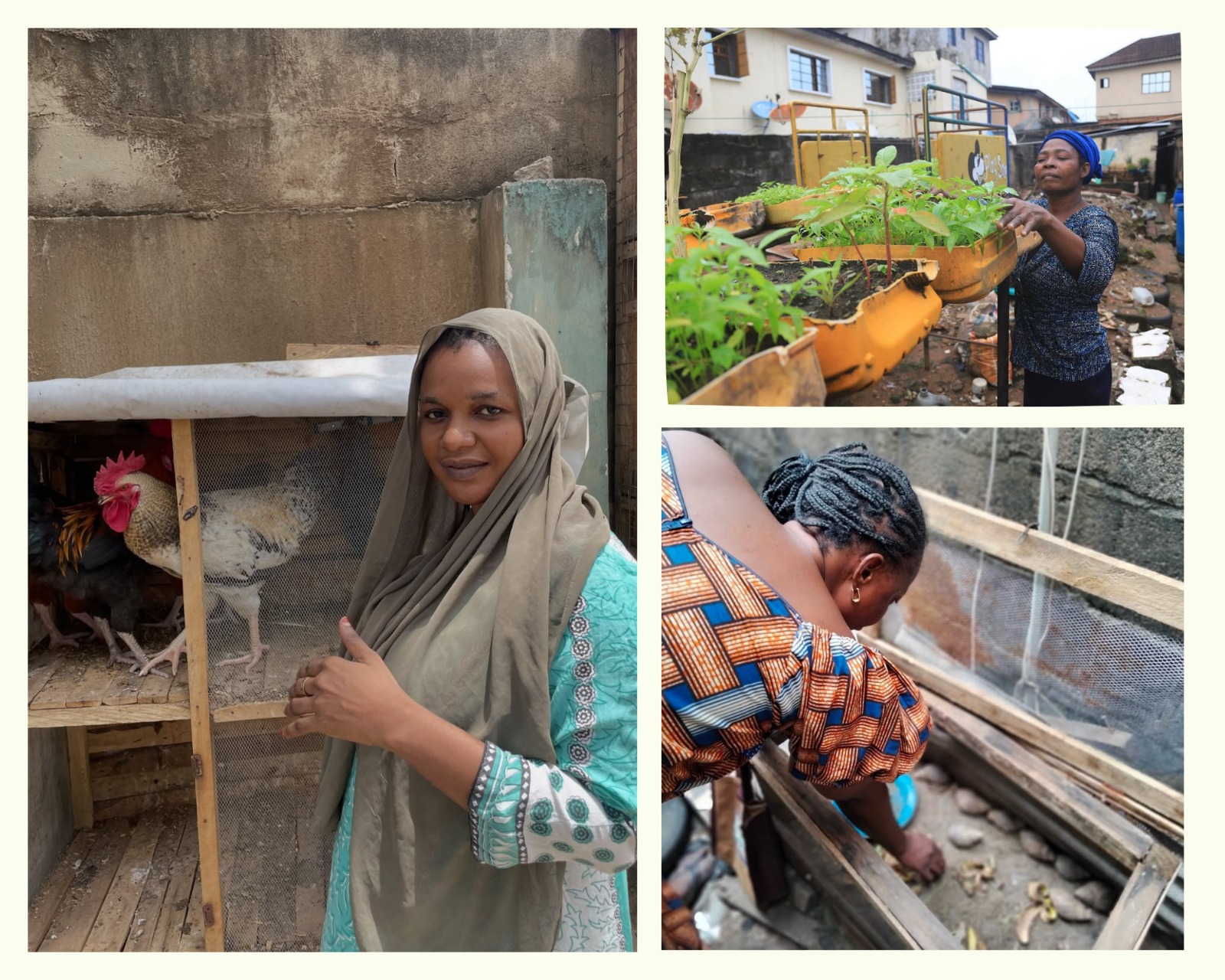
When the Lagos Food Bank Initiative (LFBI) empowers a family with poultry, snails or vegetable farming, the journey does not end when the starter kit is handed over.
For a widow in Agege raising four children, that support can mean much more than a few chickens, snails or seedlings. It can represent a chance to earn an income, put nutritious food on the family’s table and build a more secure future for her children.
But turning an opportunity into a sustainable livelihood requires more than resources. It requires follow-up, guidance and accountability.
That is why monitoring and evaluation (M&E) is an important part of LFBI’s Family Farming Program.
The farm is only the beginning
Through Family Farming, vulnerable women, widows and young people receive training and resources to establish small-scale farms within their homes and communities. Beneficiaries are trained extensively with practical demonstrations before they receive poultry, snail and vegetable farming support (seedlings, soil, cages, snails, chicks, multivitamins, feeds, feeders, and drinkers), alongside a weekly monitoring and evaluating exercise, to provide technical support to ensure the success of their farms.
For the widow in Agege, establishing her farm is the first step. The M&E exercise allows LFBI to return, observe how the farm is progressing and understand what is working, and what may need additional support.
Are the chickens healthy and growing?
Are the snails being properly managed?
Are the vegetables thriving?
Is the beneficiary applying the knowledge gained during training?
These questions transform a one-time intervention into an ongoing journey towards self-reliance.
Turning support into sustainable impact
M&E helps LFBI measure more than the number of starter kits distributed. The program tracks indicators such as beneficiary participation, training, farm productivity, income generated from farm produce, household food security and the ability of beneficiaries to continue farming independently.
This is especially important for women who are building livelihoods while caring for their families.
For a mother raising four children alone, a successful poultry or snail farm can provide food for household consumption while creating an opportunity to generate additional income. And as the farm grows, so can her confidence, independence and ability to provide for her children.
LFBI’s previous reporting demonstrates the potential of this model. In its 2021 Annual Report, Family Farming beneficiaries generated income from vegetables, snails and chickens, while 85% of produce distributed was consumed by beneficiaries, strengthening food security within their homes.
Every visit tells a story
An M&E visit is therefore not simply about collecting numbers.
It is about seeing whether an intervention is making a real difference.
It may reveal a beneficiary whose chickens are thriving and whose income is growing. It may identify another who needs additional technical guidance. It may uncover challenges early enough for the Food Bank to provide support before a small problem becomes a major setback.
Most importantly, it helps LFBI understand whether the resources entrusted to the organisation by donors and partners are translating into meaningful, lasting outcomes.
For the widow in Agege, success is not simply receiving a poultry or snail starter kit. Success is watching that small beginning grow into something that can help feed her family and secure their future.
And that is the purpose of M&E: to make sure the seeds of empowerment do not stop at distribution, but grow into lasting change.
Help More Families Grow
Sustainable food security requires more than giving families food today. It means helping them build the capacity to produce food, generate income, and become more resilient tomorrow.
Through Family Farming, LFBI is helping vulnerable households move from food assistance towards self-reliance; one family, one farm and one opportunity at a time.
You can help more women and families build sustainable livelihoods. Partner with LFBI to empower a beneficiary with the training, resources and continued support needed to grow a successful backyard farm.
Because when a family farm grows, hope grows with it.