

Building a stronger, healthier and more prosperous nation begins with ensuring that everyone can access sufficient, safe and nutritious food.
Food is one of the most basic human needs, yet for millions of Nigerians, putting nutritious meals on the table remains a daily challenge. Rising food prices, reduced purchasing power and disruptions to livelihoods continue to make adequate food increasingly difficult for households to afford.
The scale of this challenge is reflected in Nigeria’s 2026 Cadre Harmonisé analysis, which projects that 33.5 million people across 26 states and the Federal Capital Territory will face Crisis or worse levels of acute food insecurity between June and August 2027. This projection highlights the urgency of addressing food insecurity as more than a humanitarian concern. It is a development issue with far-reaching implications for the nation’s health, education, productivity and economic prosperity.
When people cannot consistently access adequate and nutritious food, the consequences extend beyond hunger. For children, inadequate nutrition can affect healthy growth, concentration and learning. For adults, it can undermine health, productivity and their ability to earn a living. Families may also be forced to spend a significant portion of their income on food, leaving fewer resources for healthcare, education and other essential needs.
This is why food security must be central to Nigeria’s development agenda. A well-nourished population is better positioned to learn, work and contribute meaningfully to society. Achieving this requires more than increasing food availability. It also means making nutritious food affordable, strengthening local agricultural production, improving distribution systems and reducing food loss and waste.
Supporting smallholder farmers with agricultural resources, training and access to markets can strengthen local food production while creating livelihood opportunities. Equally important are interventions that provide immediate food assistance and help vulnerable households develop more sustainable ways of meeting their nutritional needs. These efforts require coordinated commitment from government, businesses, development organisations, agricultural communities and individuals.
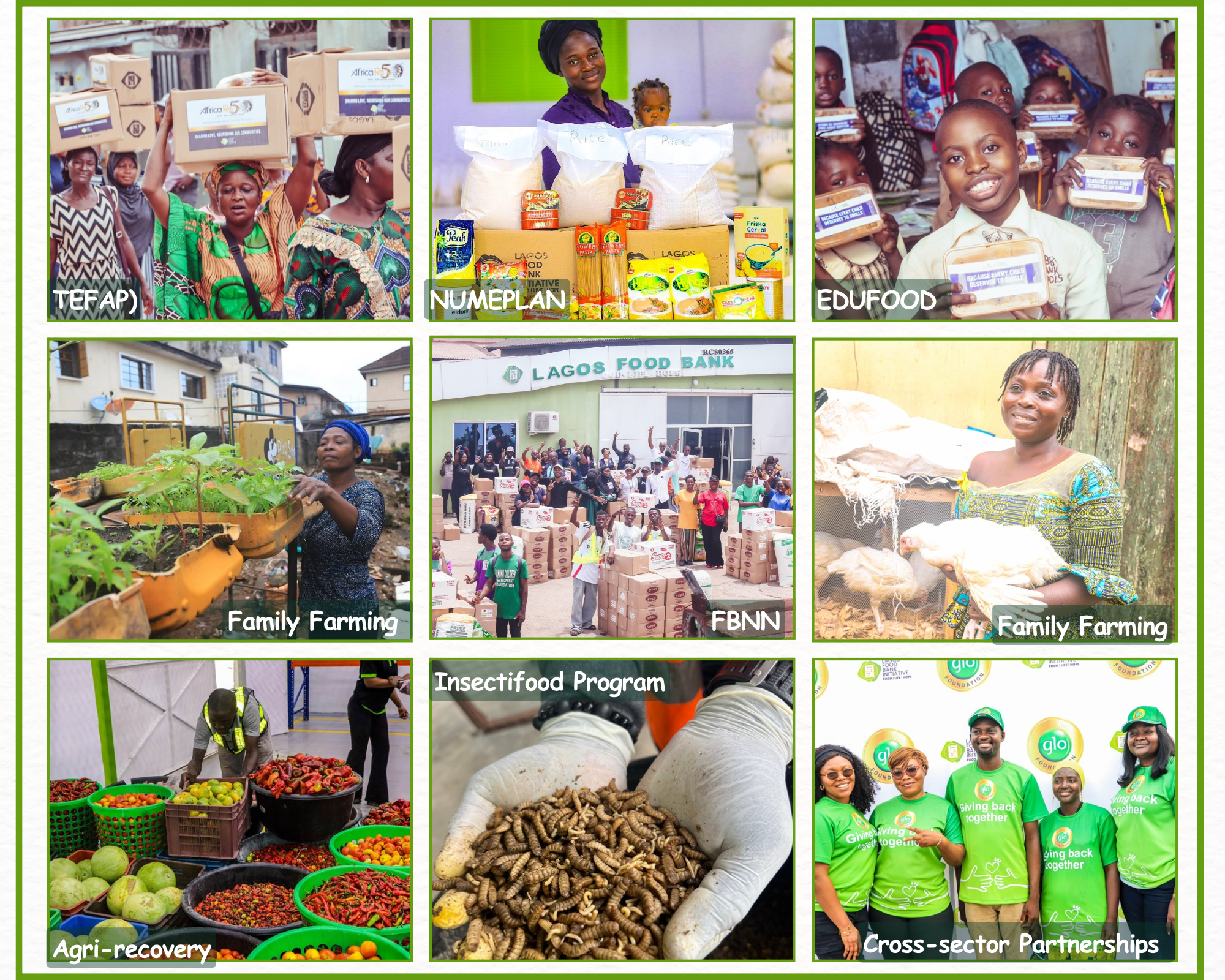
At the Lagos Food Bank Initiative (LFBI), this approach is reflected in programmes that address different dimensions of food insecurity. Through the Temporary Food Assistance Program (TEFAP), vulnerable households receive food support to ease immediate hardship. Nutritious Meal Plan Intervention for Vulnerable Mothers and Children (NUMEPLAN) addresses nutritional needs among vulnerable mothers and children, while the Education Enhancement Intervention for Food Insecure Students (EDUFOOD) supports schoolchildren in underserved communities with food during the school day. The Family Farming Program further promotes household food production and livelihood development by equipping vulnerable women and households with the resources and skills to establish backyard farms.
These interventions demonstrate that tackling hunger requires both immediate support and long-term solutions. However, sustaining and expanding their reach depends on the involvement of partners, donors, volunteers and organisations committed to building food-secure communities.
Nigeria’s development aspirations must include a future where access to sufficient and nutritious food is not a privilege but a reality for everyone. Through effective policies, stronger food systems and collective action, the country can build healthier communities, improve livelihoods and create opportunities for a more productive population.
Food security cannot be achieved by government action alone. It requires businesses to invest in sustainable food systems, organisations to support practical interventions, communities to strengthen local food production, and individuals to play their part in reducing food waste and supporting those facing hunger. Organisations such as the Lagos Food Bank Initiative are contributing through programmes that address immediate food needs while promoting better nutrition and more sustainable livelihoods. However, the scale of the challenge calls for broader and more sustained action. Every stakeholder has a role to play in building a food system where access to safe, nutritious and affordable food is not a privilege, but a reality for everyone.